



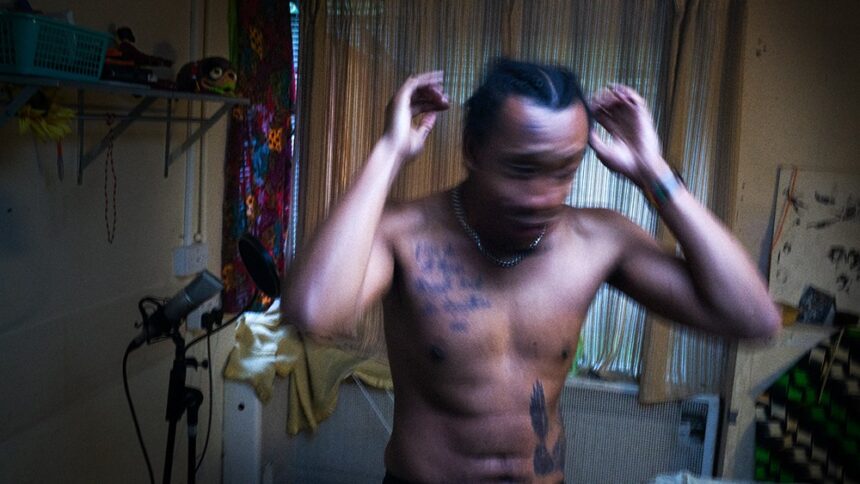
The depiction of schizophrenia on screen — especially in horror movies — has largely seen the mental health condition linked to violent and unpredictable rages, showing people when something has gone horribly wrong.
This “misrepresentation,” according to British filmmaker Billy Lumby (a BAFTA nominee for his short film “Samuel-613”), was part of the inspiration behind his feature directorial debut “Florid,” having its world premiere at San Sebastian Film Festival.
While the story doesn’t culminate in the violent depths seen in the cinema tropes Lumby was purposefully looking to avoid, it’s a tough watch. But that’s largely due to the aural sensation provided by the voices, which become more powerful and prominent as the film progresses, dragging Jamal down with them.

Jamal Jules in ‘Florid’
“We have real psychiatrists, social workers, real people with lived experiences, people with diagnoses of schizophrenia, bipolar and severe mental health experiences,” he says. Jamal’s care coordinator is played by Claire Holman, an real NHS care coordinator and someone Lumby says “opened a lot of doors” in the mental health community for him.
Lumby asserts that Holman and the others from the mental health community wanted to be involved in the project because, like him, they were “passionate” about the subject matter and also “haven’t seen it represented properly or seen their lives shown before.”
The main purpose of “Florid,” which is produced by Rupert Lloyd (an Oscar nominee for “Theeb”) and Joy Gharoro-Akpojotor (“Blue Story,” “Boxing Day”), is “awareness,” says Lumby.
“There’s a lot of stigmatization and misrepresentation, and I think the more that we open up and discuss these things, the better. Not everyone may not like my film, but hopefully it causes some kind of discussion and debate around severe mental health. People talk about depression and anxiety, but in the case of severe mental health, I think it’s something that’s still not fully understood.”