

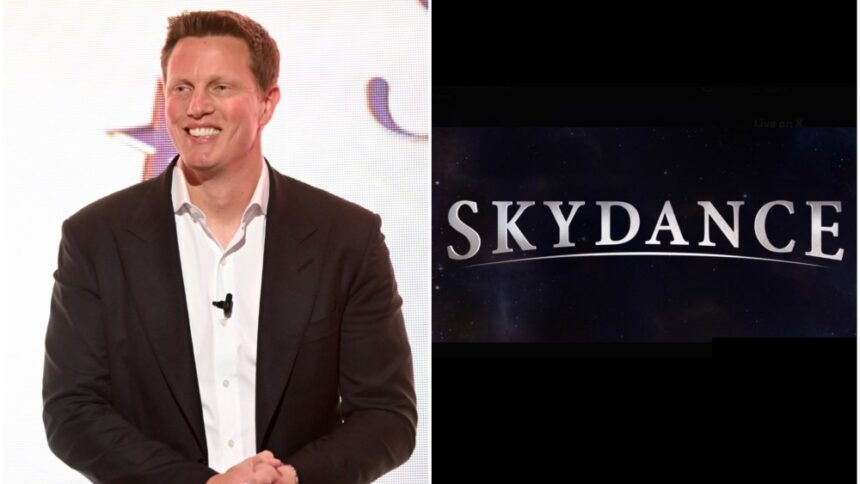
David Ellison has emerged victorious. And he’s boldly — or arrogantly, if you prefer — decided to name the entertainment giant that he’s bolted together Skydance Corp., nodding to the original name of his film production firm that has swallowed up two Hollywood studios over the past 14 months.
Defying skeptics and beating back opponents, Ellison has harpooned his white whale in buying Warner Bros. Discovery. Now he has to prove that the $111 billion mega-merger can become a profitable entertainment powerhouse, and not just a vessel that will get sucked under by a massive whirlpool of debt.
It’s all been a whirlwind. On the morning of Sept. 30, Ellison still didn’t know if it was a done deal.
Frustrated and incredulous, Ellison let it be known through press leaks in August that he would pull Paramount out of California if the state AGs didn’t let him close the WB deal. Paramount insiders continue to insist the notion of Ellison’s Golden State exit wasn’t a bluff or a threat. Bonta, seeming to realize he would gain no political capital by derailing or delaying the merger, relented. Paramount and the AGs announced a settlement of the suit on Sept. 21 — with a list of concessions so lenient that it surprised not only industry watchers but also employees at both companies.
The proposed consent decree, Martínez-Olguin wrote, reflects a “compromise that may leave some dissatisfaction for both sides and the public but a compromise that saves the risk, time and expense of litigating through trial.”
Boom! Teams at both companies swung into action to make the final preparations needed to close the deal. That evening, Paramount and WBD confirmed the merger’s expected closing date of Oct. 6, at which point Paramount’s common stock will move from Nasdaq to list on the New York Stock Exchange. The stock symbol will change from “PSKY” to “SKYD,” reflecting the Skydance corporate name.
“Paramount and Warner Bros. shaped over a century of culture,” Ellison wrote. “By combining them, we aren’t rewriting history — we’re equipping these iconic studios with a more powerful engine. Together, we are Skydance: a creative-first home for bold, quality storytelling.”
Three years ago, Ellison was primarily known as a rich kid — scion of Oracle billionaire Larry Ellison, one of the world’s richest people — and a semi-successful movie producer, most notably with 2022’s “Top Gun: Maverick,” which turned in a boffo $1.5 billion at the box office. Now, having bagged Warner Bros., he can lay claim to being a titan in the business and no mere nepo baby.
The Paramount-WBD merger is the biggest M&A deal in Hollywood history. It brings together two of Hollywood’s biggest movie studios, HBO Max and Paramount+ streaming services dand TV brands including CBS, CNN, MTV, TBS, Comedy Central, Food Network and more. The new company’s entertainment franchises span Harry Potter, Lord of the Rings, Game of Thrones and other HBO hits, the DC superhero universe, “Yellowstone,” “Mission: Impossible,” “Top Gun” and the Nickelodeon kids’ empire.
“We still have work to do before the deal closes, and nothing changes until it does,” Ellison told employees in his memo about Kreiz.
“Having spoken with David, I believe his vision is first and foremost an artistic, creative ambition,” Capton says of the Skydance merger. “He wants to build a more powerful group in order to invest in creation. It’s not only about making cuts. I believe in his commitment to cinema and to theatrical releases.” At the same time, “everywhere in the world we’re entering a much more difficult phase, where consolidation will be, in my view, one of the solutions to the economic problems we’re all going to face,” Capton says.
Paramount+ and HBO Max will together have more than 200 million subscribers. The newly merged Skydance can save money by consolidating its back-end streaming infrastructure. But “you don’t want to immediately combine the two streaming services because people won’t pay the sum of the two subscription prices,” says Prof. Sridhar Tayur of Carnegie Mellon University’s Tepper School of Business. For the foreseeable future, HBO Max and Paramount+ will continue as discrete brands.
Another area to watch: what Ellison does with CNN, which throws off operating cash that Skydance Corp. will need to bolster its finances. Ellison has held preliminary talks with CNN chief Mark Thompson about staying on after the merger, sources tell Variety. The prospect of Thompson continuing at the helm, at least for now, came as a relief to CNN personnel, who have been worried that Bari Weiss, the “anti-woke” media entrepreneur Ellison put in charge of CBS News, might extend her fiefdom to include the news cabler.
Ruffalo’s feud with Paramount got ugly. On Aug. 21, he posted a message warning about the dangers of the Paramount-WB merger and alleged Larry Ellison’s Oracle was complicit in “what we now have come to see as a genocide” by the Israeli government against Palestinians. Paramount responded forcefully. A company rep asserted the “antisemitic tropes” Ruffalo invoked “aren’t just wrong — they’re a bridge too far.” Ruffalo has been set to reprise his role as an FBI agent in a second season of HBO’s “Task” crime drama. It remains to be seen if Ellison will let bygones be bygones.
Apart from the shouting, the biggest burning questions about the new entity are about its financial condition.
How is Paramount buying Warner Bros. Discovery, which has a market cap that’s six times larger? Paramount is issuing billions in debt securities and securing new loans to help foot the bill. Larry Ellison is bankrolling the WBD merger to the tune of $46.7 billion in equity financing. Paramount also lined up about $24 billion in commitments from the sovereign wealth funds of Saudi Arabia, Qatar and the United Arab Emirates. In April, Paramount said the three Middle Eastern funds will own 38.5% of the combined entity, but that they will have no board seats or governance representation.
The new company will be controlled by the Ellison family alongside Gerry Cardinale, founder and managing partner of RedBird Capital Partners. Cardinale’s firm is also pitching in equity for the WBD deal, after funding Skydance’s Paramount Global takeover.
The new company’s net debt is estimated to be more than $80 billion. That staggering amount would translate into annual interest payments topping $6 billion. Add to that the fact that Paramount-WB, under the settlement with the AGs, is obligated to invest at least $300 million more on film production in the U.S. annually (above what the studios combined spent in 2025).
Ellison, after the final clearance for the merger came through, wasn’t exactly popping the Champagne just yet. But he did, apparently, pop open some breakfast burritos.
Perhaps it was more like a peace offering, coming before the pain of a first wave of layoffs at the new Skydance expected before the end of the year. The merger could result in the loss of some 4,500 film and TV jobs over three years in L.A. alone, according to a report issued by Los Angeles County in August. Insiders believe layoffs will continue with further rounds into 2027.
There’s no way around the fact that thousands of employees across the former Paramount and WBD are about to get pink-slipped. But Ellison is betting that through the crucible of consolidation, a stronger company will emerge. “We have big goals for Skydance,” he wrote in his post on X about the new name, “and we intend to pursue them with passion, imagination and a willingness to take smart risks.”