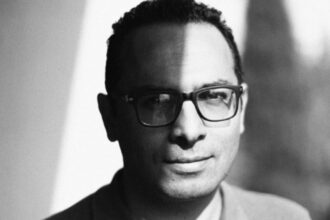



“To me, the greatest diplomatic tool – the greatest instrument for countries and governments to understand one another and come to the table with a different perspective – is cinema,” says Santiago on stage while alerting the audience to the importance of strong public policies as the foundation of a healthy film industry. “I view cinema as a powerful diplomatic weapon.”
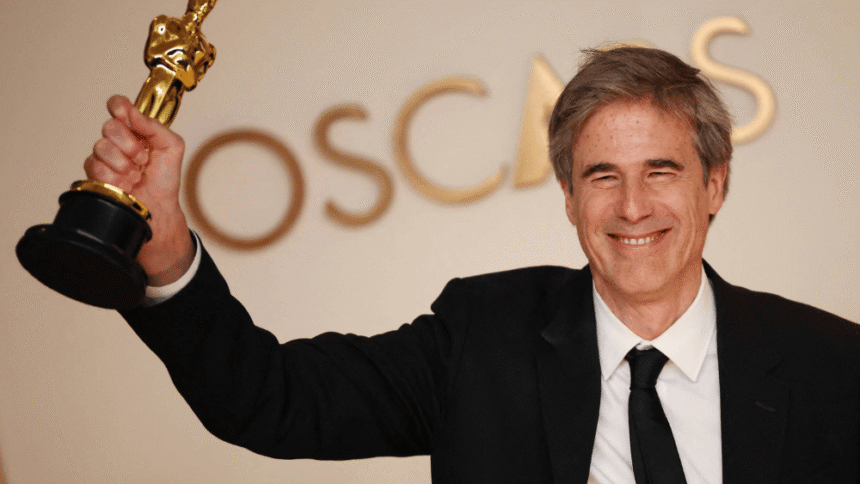
Having one of the most important presidential elections in the history of Brazil take place during the country’s largest film festival makes for a very particular encounter. Brazil, one of the greatest cinema nations in the world, has reaffirmed its international reach and success in grand fashion in the last two years: Walter Salles’ “I’m Still Here” won the country its first Oscar in 2025, with Kleber Mendonça Filho’s “The Secret Agent” bringing Brazil back to the glitzy awards earlier this year after picking up two prizes at the 2025 Cannes Film Festival. The sentiment has been palpable in festivals and markets around the world: Brazil is on the up and up. It is the country to bet on.
But this success, of course, has not happened in a miraculous silo. Brazil’s renewed industry is the product of Lula’s public policies. The president is perhaps the most culture-and arts-focused in the history of the country, having hosted regular screenings of Brazilian films at the presidential residency in Brasília and investing heavily in the country’s film sector following four years of a Jair Bolsonaro government that almost immediately did nothing to counteract a court judgement’s stripping away of near all public support for cinema.
“Bacurau”
Photo Cinemascópio
Bolsonaro’s presidency was confirmed mere months before Mendonça Filho’s “Bacurau” and Karim Aïnouz’s “The Invisible Life of Eurídice Gusmão” both picked up awards at the Cannes Film Festival, a moment that could have pushed the country’s cinema to a rise similar to the one we have seen in the last two years. The government that came soon after brought it all to a screeching, heavily consequential halt. Soon after taking over the presidency, Bolsonaro cut the budgets for the National Cinema Agency (ANCINE) and the Audiovisual Sector Fund (FSA) by nearly 43%. Before the COVID-19 pandemic that further accentuated the sectorial crisis, the Bolsonaro government was behind an 18-month freeze of public funds for the national agency.
Now, having experienced a reality where public policies contribute to a thriving industry, local producers, filmmakers, and film workers are faced with a devastating scenario. Last night, in the tightest presidential race in the history of Brazil, Lula took second place to Jair Bolsonaro’s son, Flávio, the former gathering 45.16% of valid votes against the latter’s 47.03%.
The future for national cinema is bleak under a potential Flávio Bolsonaro presidency, with the candidate vowing to mimic virtually all of his father’s policies—and tighten some even further. The Senator is also currently under investigation by the Federal Police for alleged money laundering, tax evasion, and corruption related to the financing of Cyrus Nowrasteh’s “Dark Horse,” an English-language biopic about former president Bolsonaro starring “The Passion of the Christ” actor Jim Caviezel as the far-right politician.
Authorities are currently looking at around R$61 million ($12 million) in funds provided by Daniel Vorcaro, the owner of Brazil’s Banco Master, to finance the film. Leaked messages show Flávio Bolsonaro himself directly negotiating payments with Vorcaro to fund the inflated project. Vorcaro is currently in prison, accused of multi-million financial fraud. He was detained in early March after a judge cited “strong indication” that he attempted to bribe a former central bank director.
Karim Aïnouz and Carol Duarte at the Rio Film Festival, courtesy of Cristina Granato