




Don’t doubt what you can see with your own eyes.
Keynote speakers for the day included multi-hyphenate media entrepreneurs Charlamagne Tha God and Questlove.
Trailblazers of the Experience Economy
Knowles pointed to the growth of Canva’s annual Canva Create fan conventions as an example of how the importance of experiential events for brands.
“Experiential marketing has gone from being a line item in a marketing budget to being the strategy,” Knowles says. “That is a very strategic shift that we as brands are making right now. We’re not recipients of the brief any more; we’re writing the brief.”
Malenshek detailed how Land O’Lakes is stretching beyond its agricultural and dairy product roots to help bring contemporary perspectives on rural America to life. There’s a lot of misinformation that only exacerbates our culture urban-rural divide.
“We’re working with Imagine Entertainment and Ron Howard, who was a farm kid,” she says. “We’re not going to make movies. We’re trying to affect the writers, some of whom have never left the city of Los Angeles. It’s a long game and we hope over time to start seeing shows that are much more authentic to that area.”
A Conversation with Nick Brien
The CEO of Outfront did not hold back on his views about how AI is disrupting marketing in his conversation with Brian Steinberg, Variety’s senior TV editor.
IRL Advantage: Building Trust in an Agentic World
Marketers need to work harder than ever to build fan communities with genuine connections to consumers. Physical media helps in that process as research shows consumers trust a brand that “shows up” in the real world via billboards, et al. “It can be a location-based community or it can be community of interest that we can help brands tap into.” She called it a “force-multiplier” effect.
“We’re not going up against online media. We’re saying ‘Think about physical media, IRL media, as a foundation in a holistic media plan, an omnichannel media mix.’”
Bhaskaran says she sees this phenomenon playing out with the Gen Z consumers that she studies. “We call them the ‘Memento Generation.’ They value memories more than they do physical things. The discovery might start on social but the experience happens in person and then you share back on social and it creates this virtuous cycle of community,” she says.
Sports Gamechangers Roundtable
Shah gave an example of how NFL teams are leaning on content and personalities to reach casual football fans. The Giants tapped veteran quarterback Eli Manning to host a digital interview series related to the team but featuring guests such as Michael B. Jordan and Caitlin Clark. The show has drawn 150 million video views in five years.
“We’re having to think about content that way. It can’t just be about what’s happening on the field,” Shah says. “It’s got to be about personalities and how are you driving that consumption.”
The Next Frontier of Experiential Entertainment
As echoed by many other panelists throughout the day, Caine emphasized that for today’s consumers, the experience is the thing that drives their purchasing and viewing decisions. It’s not a side benefit.
“It can be anything that you’re passionate about. Some people want sports, some want in music. People want access to experiences. There’s a big trend of speakeasies now. People want to get that secret behind-the-door thing,” he says. “Having that unbelievable dining experience — it transcends value of the food you have. It really comes down to your passion.”
The City as a Canvas
The Business of Fandom: NBC100 and the Power of Cultural Moments
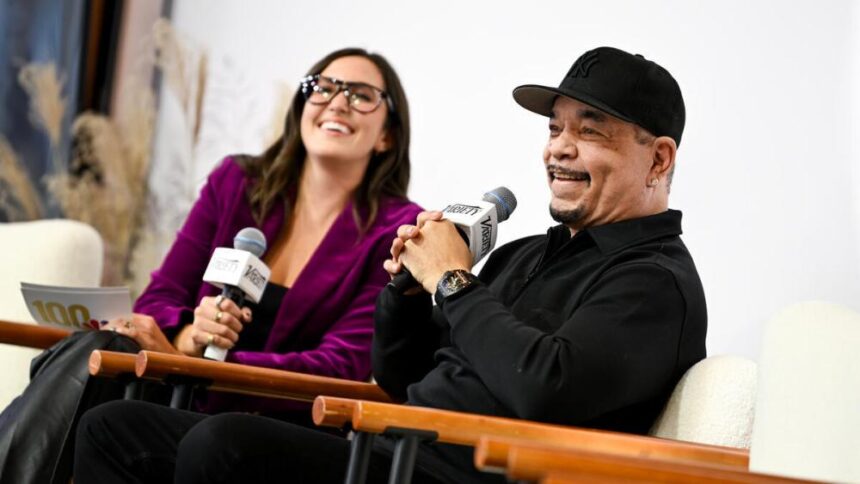
The discussion centered on NBC’s extensive marketing campaign. But Ice-T stole the show with his reflections on working with none other than Taylor Swift to film the “SVU” spoof that aired last month on the Emmy Awards telecast, which was hosted by his co-star Mariska Hargitay.
“Taylor Swift has that energy,” he says. “She just knocked it out. I’m sure she could act in anything she wants to because she has that thing.”