





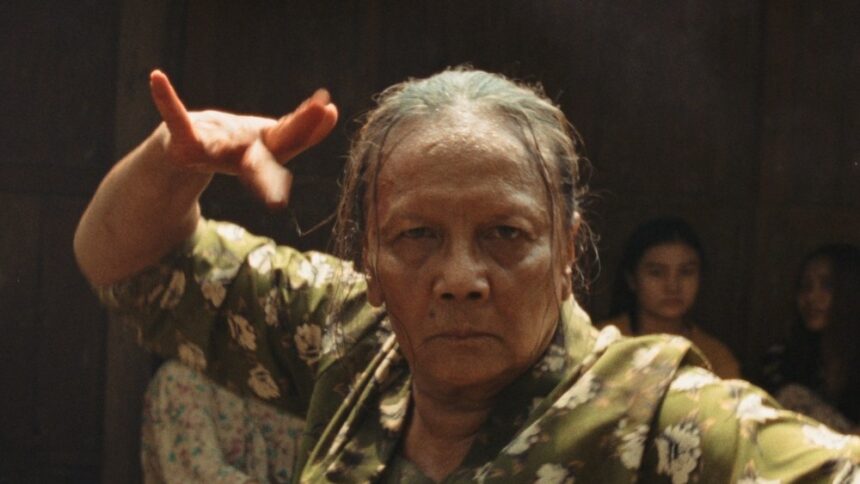
Premiering in Competition at the Busan Film Festival, Cahyono’s film is most compelling when its spiritual qualities are felt rather than seen, when its story is discovered through Hakim’s layered and complex performance. The filmmaker has spoken about his personal connection to the material, which is informed by his own experience of leaving the village for a better life, to send money home. Not that this is autofiction: “Ibuku” finds its basis in the contemporary exploitation of migrant workers, and traces the tragedies of this demographic back to their roots at home.
Sumiati is a once-famous performer of Jathilian, a form of Javanese dance (also known as Kuda Lumping) in which the performers are “possessed,” the ritual accompanied by a shaman as well as percussion. Such spiritual communion extends to Cahyono’s intimate handheld cinematography, which, when not centered on Hakim, frames her home and landmarks in the village as though Sri and her husband are still present, the grainy and dreamlike haze of film making that connection feel ever-present.
The locations are often stunning, notably the deep-nested roots of a tree extending into a cave where Sumiati goes spelunking for water and later attempts to build functioning pipework. The water is shot with an orange glow, and the image carries a spiritual power that continues through the film’s capturing of Hakim’s sensitive and mournful performance — as Sumiati subtly entreats forgiveness from the spectres of her departed family, and in turn from the village. The village itself is represented through the kindly but put-upon figure of the chief Djatmiko (Landung Simatupang), who himself must reckon with potential transgressions between himself and Sumiati.