



It opens on a sequence of quite frightening, disorienting strangeness that immediately makes sense of the film’s outwardly surprising PG-13 certificate — presaging a degree of bloodshed and emotional intensity not to be ignored by parents seeking an animated film to babysit their little ones. As a thunderstorm rages outside, a young boy in an imposing woodland castle steps onto a high terrace outside his bedroom, and deliberately plunges to his death before his distraught mother can stop him; as crowds gather at the site of the tragedy, it’s discovered that the boy was merely an android, his chest shattered to reveal the metal cogs within.
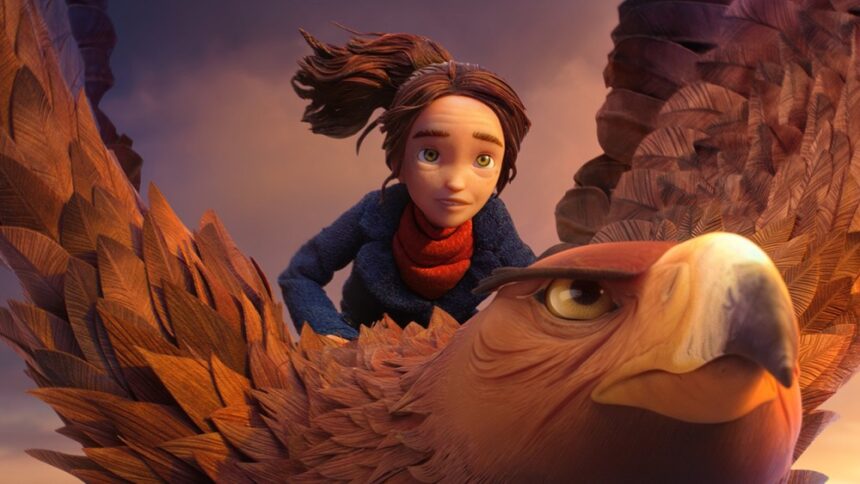
It’s some time before we’re given the context for this solemn, cryptically beautiful opening gambit, as we cut to an altogether more recognizable childhood: that of precocious 12-year-old Prue (voiced by Peyton Elizabeth Lee), who lives with her bohemian hipster parents (Jake Johnson and Maya Erskine) and baby brother Mac in a tranquil Portland suburb, and who’s just beginning to wish for a life less ordinary, or at least less oatmealy. Her parents are earnest, overprotective types (Mac is never allowed outside, for reasons initially unknown) who subscribe to much regional lore and superstition, particularly regarding the so-called Impassable Wilderness on the edge of town — a temptingly dense forest that locals are forbidden to enter.
Enter it we shall, of course, but only under dire circumstances — when Prue, skeptically ignoring her parents’ instructions when asked to look after Mac for an afternoon, takes him to a local playground, only to watch helplessly as the infant is lifted up, up and away by a distinctly Hitchcockian (and quite possibly literal) murder of crows. Cue an enthralling chase sequence, doubling back through those higgledy-piggledy Portland streetscapes, toward the woods — the impenetrable thickets and thorns of which magically part in her presence. (Another point of mystery to be bookmarked for later.)
It’s a saga at once complex and classically simple, rife with timeworn fairytale tropes from grieving queens to imperilled babes in the wood, and stuffed with enough peppy secondary characters to justify an all-star voice ensemble. (Mahershala Ali is a gruff but gold-hearted warrior; Awkwafina a snide but helpful rat heavily indebted to E.B. White’s Templeton.) It runs into a lull here and there — the runtime, while swaggeringly impressive, is not altogether necessary — but it’s largely entrancing, not least because each newly revealed nook of these infinite wilds gives a crack team of claymation artists new tones, textures, creatures and mythological reference points to play with.