


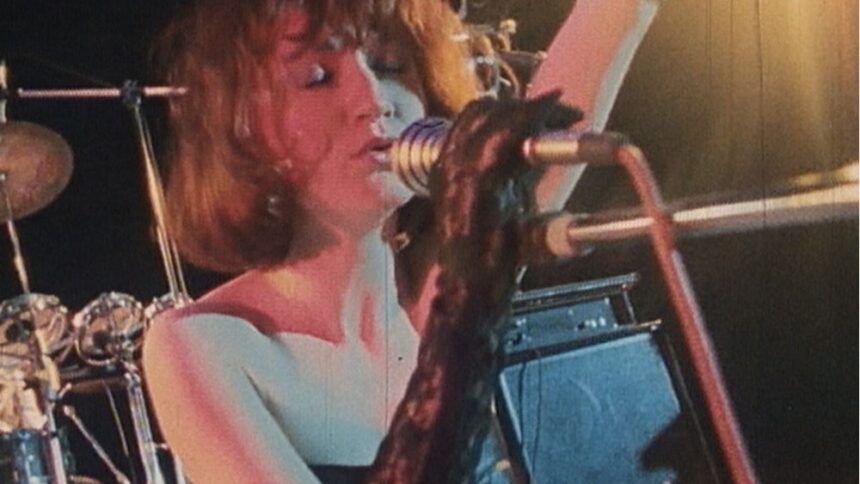
“Bára Basiková is a truly fascinating singer,” says Czech documentary filmmaker Helena Třeštíková, who was honored for her contribution to the genre at this week’s Ji.hlava Documentary Film Festival.
The singer, who remains “someone who defies easy musical categorization” was the focus of Třeštíková’s own post-Velvet Revolution docu work for Czech TV, the director says.
“I began filming Bára in 1996, as part of a series of 10 time-lapse documentaries – filmed over the course of five years – about various women in different professions. At the time, Bára caught my attention due to her unconventional family situation: Her husband stayed home to look after the children, while Bára worked intensively and supported the entire family.”
“She spoke with total openness about all her joys and her struggles – and those struggles were quite significant: Over those 30 years, she went through three marriages and three divorces.”
“Openness,” Třeštíková says, “is one of Bára’s defining traits. Most other female singers carefully craft their ‘media image.’ Bára has never done that.”
“As a well-known singer, Bára was under greater media scrutiny than the other women I’ve filmed, whose lives were entirely private. While Bára’s challenges were partly influenced by her profession, in her private life, she faced the same struggles as many other women.”
“I have been working with this time-lapse documentary approach for over 40 years; it is the fundamental method of my work. It bridges the gap between documentary filmmaking and the stories that life itself writes – that is what I find so compelling and inspiring.”