




In Peter Farrelly’s “Green Book,” Viggo Mortensen’s driver famously introduces Mahersahala Ali’s concert pianist to fried chicken. The white man, an expert, proves his cultural bona fides to the Black protagonist, the student. The pair of outsiders share a moment of bonding, and America’s wounds are salved.
That movie felt dated in 2018. Eight years later, “By Any Means,” the second feature directed by Elegance Bratton, plays like a downright relic. Equally egregious in its vision of racial healing and even less watchable on a scene-to-scene basis, this new film similarly involves a white man edifying his starchier Black associate, although here, the lesson is not in the culinary arts, but in the art of ruthless violence.
Set in 1960s Mississippi, the film opens with an archival montage establishing the disappearance of three civil rights workers during Freedom Summer. Two of the men were Jewish, one was Black, and all three were working to register local Black voters. The historical media clips conclude with the search still underway and authorities vowing to find the men and bring those responsible to justice.
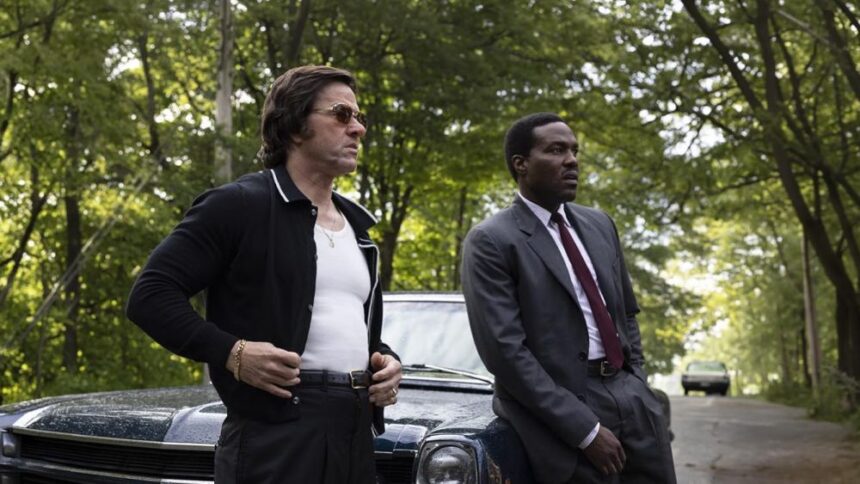
So begins a streak of brutal and relentless violence taken brutally and relentlessly seriously. Based on a true story, the film tracks Wahlberg’s character, the mob enforcer Greg Scarpa, as he teams up with FBI Agent Wayne Strider, played by Yahya Abdul-Mateen II. The pair are tasked with investigating the murder of local NAACP chapter president Vernon Dahmer (Giancarlo Esposito) by members of the Ku Klux Klan — though they have starkly different ideas about how to get the job done.
Here’s where the title comes in. Wayne, who confronts the cruel effects of white supremacy daily on the job, believes in working within the system. He became an agent to uphold the law, and prefers to play things by the book. Greg has no such allegiance. Quietly enlisted by Wayne’s superiors, the mob muscle operates by a simpler principle: Information should be obtained by any means necessary, including, and especially, clobbering it out of potential sources.
That phrase — “by any means necessary” — was, of course, popularized and embodied by the Black activist Malcolm X, and its implicit transfer here to Greg is just one instance of the film’s crude rewriting of history. It opens by claiming that its events are based on a true story, but that isn’t exactly the case: While Greg Scarpa was a real mobster likely deployed by the FBI on the sly, there is no evidence that he worked with a Black handler, and Wayne Strider is an invented character.
Regardless: this is a movie, and its particular brand of movie magic lies in repurposing familiar tropes into a gripping action thriller. As the men go about their investigation, driving around the city and interrogating locals, those tropes come to include white saviordom, but also the more pedestrian mismatched buddy duo, in which comedy and drama derive from the men’s clashing sensibilities beyond their approach to violence.
Wayne, who trained in Chicago before moving home to Mississippi, is a buttoned-up instrument of the federal government, and though he has a rough edge — at one point, he punches a filing cabinet in frustration — he is nearly prim in his fidelity to the letter of the law. He’s also devoted to his wife (Nicole Beharie, doing a lot with a little), who spends much of her screen time quietly affirming him, rubbing his neck or exchanging a heartfelt look.