



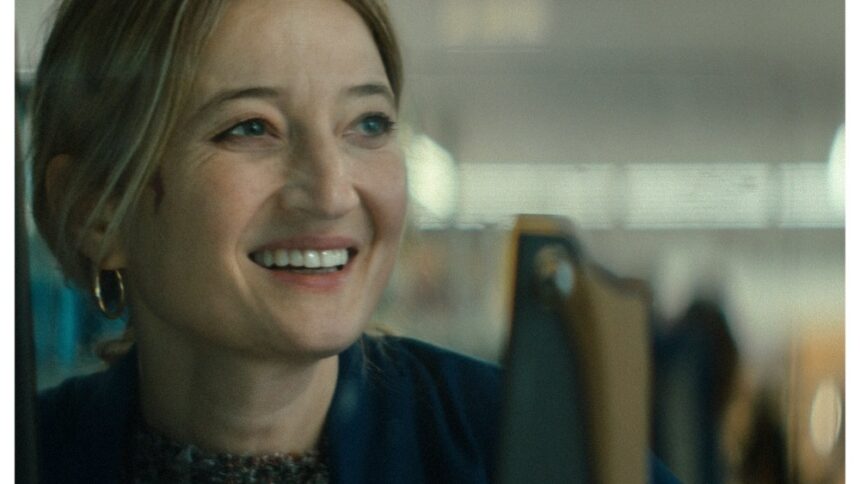
Actor-turned director Anna Foglietta is back in Venice in a different guise this year, after serving as the event’s official emcee in 2020.
The film, being sold by True Colours, is produced by HT Film, Indigo Film, Tenderstories and Blu One Lab with support from Rai Cinema and in collaboration with HBO Max.
Foglietta spoke to Variety about working with Rohrwacher and shares her thoughts about Venice’s gender imbalance.
How did “A Common Story” germinate?
There is a whole generation that does not really know itself and doesn’t have the will or the desire to do so. So together with screenwriter Matteo Ferri, with whom I wrote the story, I started to think about how to bring these elements together. I thought about a very simple couple. I’m very passionate about the part of humanity that never basks in the spotlight. They deploy energies and strategies to keep this world turning, but nobody cares. It always seems that great revolutions, even profound emotional and psychoanalytic ones, are always the prerogative of the bourgeoisie just because they have all the right cultural tools.
So I focused on two very simple people. Smart, with great emotional intelligence. But undoubtedly very simple. People who don’t have the tools that allow them to really examine and understand each other. Some people have a really serious difficulty with that. I thought it would be intriguing that with this type of simplicity, we could get all of humanity to speak. To reach a truly universal level.
What was it like working with Alba Rohrwacher?

Courtesy Filmitalia
Speaking of female empowerment, how do you feel about the fact that there is only one woman in competition at Venice this year?
I think objectively this is a horrible year from that point of view. It’s shocking to see just one woman in competition. In past years, however, it must be said, things went better in Venice. It’s interesting that in Horizons the gender balance situation is much better [eight out of 19 films in the section are directed by women] because it’s the more experimental section. This indicates that women are bold directors. We are being bold in our gaze, our vision, and our direction, and for me this is a virtue and a value. But it must be said that the problem is systemic. The system doesn’t help support female directors and the female perspective. We absolutely need to focus on this new perspectives because today, as we have seen, it’s a huge resource.
This interview has been edited and condensed for clarity.