



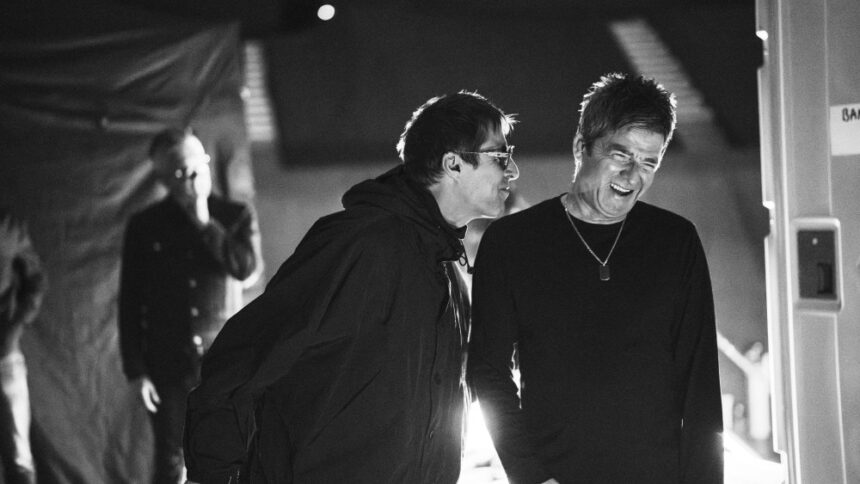
But while some tension is palpable, sparks do not fly — or at least, filmmakers Dylan Southern and Will Lovelace (whose previous rock docs include 2010’s Grammy-nominated “No Distance Left to Run,” about Oasis’ old ’90s rivals Blur) do not choose to show them if they do. It is soon clear that “Don’t Look Back in Anger” is far from an unvarnished portrait of an often fraught relationship, let alone a tabloid-style collection of shocking anecdotes.
Although neither Noel nor Liam can help expressing themselves, in new on-camera interviews, in the candid manner that they always have, they remain not just on their best behavior, but also at what feels like a PR-trained remove. Their professional focus — the usually raucous Liam is described by a band member as being uncharacteristically “business” in rehearsals — is in step with a film whose attempts to conceal its obvious financial raison d’etre often feel absurd and tacked-on.
With the two brothers on somewhat guarded form, offering little insight into their own thoughts or emotions throughout this experience, the film dedicates a significant portion of its two-hour runtime to the fans. “Don’t Look Back in Anger” might have benefited from the hindsight of a few more years and constructed a compelling argument about what Oasis meant in 2025, especially in the U.K. The tour seemed the latest and most spectacular sign of a society-wide nostalgia for the 1990s, responding perhaps to a series of national disasters (Brexit, Covid-19, rapidly succeeding prime ministers), and occurring in the middle of a wave of national pride and hope (the soccer) that was itself shoring up against decidedly less positive attitudes (the rise of right-wing politicians and policies).
The film’s generally po-faced attitude as a whole seems an odd fit for the Gallaghers. It is difficult to imagine them not responding with a barb of some kind to the footage of an actual sermon. The priest likens the concert crowds to a pilgrimage, and quotes Matthew 18:21 (“Lord, how many times must I forgive my brother?”) before claiming that the people have come not so much for the music as “for the reconciliation between two brothers.” The somewhat bombastic approach of screenwriter and “Peaky Blinders” creator Steven Knight, who created and wrote the doc, has been successful elsewhere, but feels at odds with the band’s ethos here.
These stabs at earnestness do nothing to diminish the feeling of the concert film being little more than a cash grab. Likewise, the repeated point about Oasis’ working-class origins, while true, comes across as another attempt at striking a sentimental chord — in a way that feels anathema to Oasis. In a context where the price of concert tickets today excludes working-class fans from attending shows at all, it feels doubly insincere.