





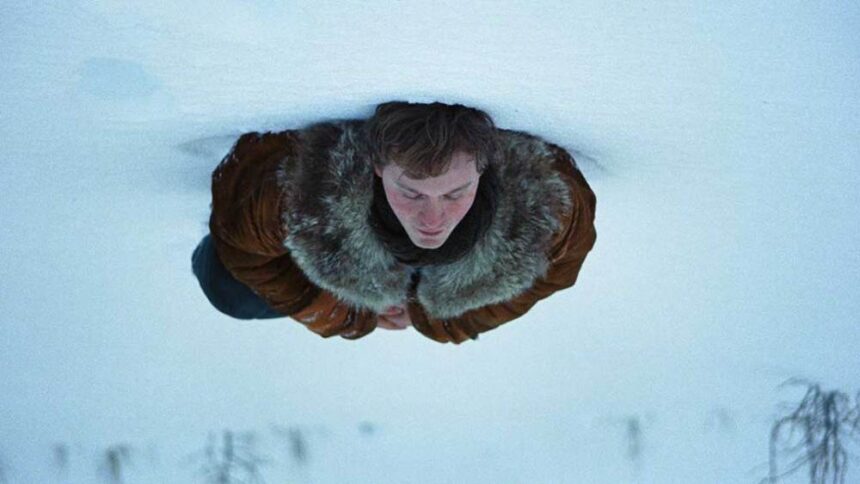
One definition of great cinematography is pretty pictures that move. On that score, “A Long Winter,” the majestically moody new drama written and directed by Andrew Haigh (“All of Us Strangers”), more than qualifies. It’s set on a remote farm nestled high in the Rocky Mountains in the early 1950s, and the images — of jutting peaks and plunging valleys, of endless stretches of pine, of the craggy frosted grandeur of it all — are vivid enough to carry you away.
Yet the real definition of great cinematography is when a filmmaker, working with a bold camera artist (in this case, André Turpin), frames the images so they don’t just dazzle but lure the audience, unfolding the action with a shimmering inquiry and suspense, as if each shot were another sentence in the story it’s telling. That’s the way “A Long Winter” works. Based on a novella by Colm Tóibín, it’s a film austere enough to risk alienating its audience, yet once you get onto its wavelength you stay right there, inside the movie’s world.
It’s the deception, of course, that’s the red flag. Lester has always known about her drinking, but the moment has come (not the first) when he decides to intervene. Back home, after a heating-oil delivery (which is also a wine delivery), he throws out all of Louise’s cheap rotgut wine. He has decided, with a puritanical insistence, that he’s going to heal her by making her quit the booze cold turkey. But she’s having none of that; she feels like she needs the drink to survive. Caitríona Balfe acts with the impacted fervor of someone who’s caught in a life she chose but no longer wants. She’s trapped. And so, without her crutch, she leaves — just like that. As the first winter storm is coming. Is she seeking alcohol or death? Maybe both.