




SAN SEBASTIAN, Spain – “Violence has no justification, but it does have an explanation.”
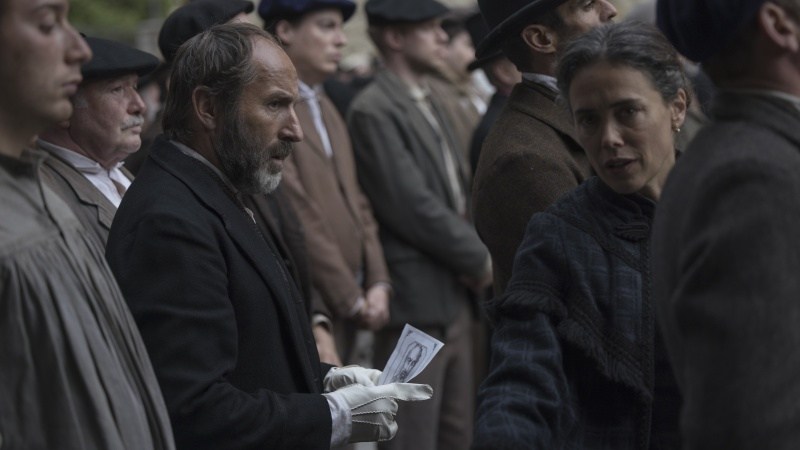
That was Antonio de la Torre’s approach to playing 19th-century murderer Juan Díaz de Garayo in David Pérez Sañudo’s “The Harvester,” which world premiered at San Sebastián, sold by Latido Films.
Pérez Sañudo said the filmmakers did not want to feed a myth they did not believe in, explaining that the production wrestled with how to portray Garayo, known as Sacamantecas, without turning violence against women once again into spectacle.
“He is still a character whose main feat is killing women,” the director said. The question became how to shift attention toward the women and the society around him.
“I think the character, Ángela, represents the status quo of the time,” López Arnaiz said, describing a woman defined by ideas of honor and by the prescribed role of women in 19th-century society.
As the story develops, however, Ángela is forced to confront those structures. López Arnaiz said the character’s intimate conflicts taking in family, women and the stigma surrounding single motherhood, ultimately become inseparable from the film’s political dimension.
For the actor, that is where the period setting becomes particularly useful. “What changes really is the form,” she said. The costumes, carriages and physical environment may belong to another century, but the family and political conflicts underneath them remain recognizable.
“The film is very current because we continue living with systemic violence against women and we continue living in a patriarchal system,” she said.
That led them to consider the territory surrounding him, a society marked by poverty, political upheaval, civil war and violence rather than search for a neat psychological explanation for one man’s crimes.
De la Torre followed the same principle in his performance. He described Garayo as “very animalistic,” a man who struggles to express himself and whose presence is more physical than verbal.
The film has participation from EITB, RTVE and Prime Video and backing from Spanish and Basque public institutions. Buena Vista International will release the film theatrically in Spain, while Latido Films handles international sales.
The filmmakers also deliberately kept their distance when depicting violence. Pérez Sañudo said removing it entirely would have felt dishonest, but filming it too gratuitously risked reproducing the fascination with the killer they were trying to reject. The first murder we see is horrific, but from its sparseness, shot statically in a wide shot from far across a river.
For Basque cinema, the film’s scale is another sign of a sector increasingly able to mount ambitious period productions without leaving its regional production ecosystem, though drawing on substantial financing from Spanish pan-regional and international co-production .