





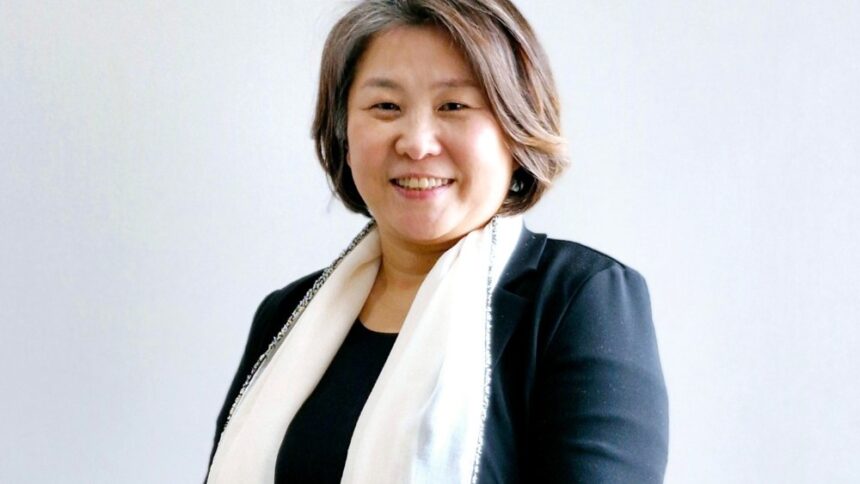
Kim calls the idea ACFM 365. It would be a permanent database and matchmaking service that joins the market data in The A Report with the matching work now done by the Asian Project Market (APM) and the Busan Story Market.
“The biggest obstacle is funding,” Kim says. “The scale and the role of the market have grown quickly, but public support has not kept pace. National funding for ACFM has stayed at the same level for two years running. The film industry is small in scale, but it is the front-runner that opens the way for other industries. Supporting film is an investment, not a subsidy, and a market needs to be understood as industry infrastructure, not as an event.”
“The core is cinema,” Kim says. “The Sales Market, APM and the Asian Cinema Fund are the backbone of ACFM, and that structure will not change.” She applies one test to any new program: whether it widens the opportunities for cinema.
“Visibility and revenue are different things,” Kim says. “For much of the Asian content that has succeeded globally, most of the IP and the revenue belong to global platforms or studios.”
“Producers say they cannot find money; investors say there are no projects to invest in,” Kim says. “I see this as a rebound, not yet a structural recovery.”
As a result, Korean producers now plan international pre-sales and co-productions from the development stage. The Asian Producers Alliance, led by the Producers Guild of Korea (PGK) and the Association of Indonesian Film Producers (APROFI), will announce its launch at ProducerHub.
Streamers are moving from licensing rights to co-financing production, according to country reports in The A Report. In the Philippines, only 32 of 88 first-half releases played in cinemas. In Korea, an industry agreement on holdback windows that was targeted for August did not happen.
One year after InnoAsia’s launch, Mateo AI Studio has raised KRW2 billion ($1.5 million) in pre-Series A funding. The AI feature “Steelay” will be previewed at this year’s Work-in-Progress Showcase and opens in Korean cinemas on Oct. 20. This year’s theme is “Cinema Coevolves with Tech.”
“What concerns me is that institutions and people are not keeping up with the speed of the technology,” Kim says. She also worries that junior crew could lose their training ground if their jobs are automated first. “And if Asia does not own the models trained on Asian languages and images, the IP problem we lived through in the platform era will repeat itself.”
Kim produced “Cry Woman” and “Hanaan.” She tried to co-produce “Hanaan” internationally, but it ended up a solely Korean production shot in Uzbekistan. Today she sees co-productions forming between Asian countries, including a three-way project from Thailand’s M Studio, Japan’s Toei and Korea’s Showbox, and the first financial co-production between Korea and Mongolia. Treaties between Asian countries are still rare.
“Co-production used to be an option; now it is an essential strategy for sharing risk,” Kim says.
Asked why companies should come to Busan rather than Cannes, Berlin, Hong Kong or Tokyo, Kim points to the festival and the city. “Busan has the Busan International Film Festival, where the sea, cinema and stars come together, and ACFM is held alongside it. For people who have been coming to the festival for many years, Busan has become something like a hometown: a place with flavors they miss, films they miss and people they miss,” she says.
She also notes that international participants outnumber Korean ones. “For anyone who wants to work with Asia, there is no place as efficient over four days,” she says. “Projects that pass through APM and the Asian Cinema Fund turn up at major festivals a few years later. Busan is where you can meet those films first, at the development stage. Companies from Europe and the Americas know this too, and for them Busan is the gateway to Asia.”