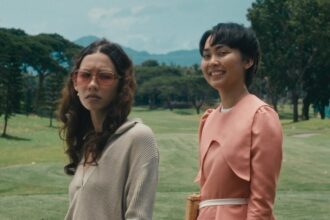



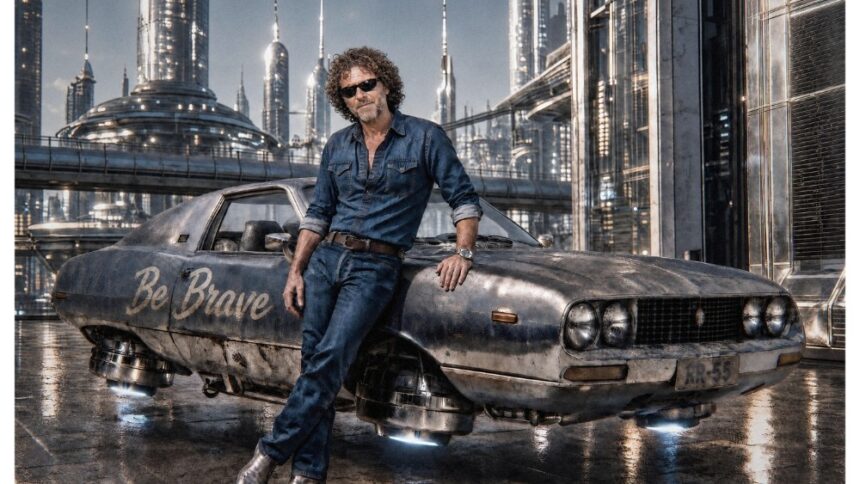
“I want to put this [film] forward as an invitation for everyone to think about how AI as a tool can open up new creative possibilities for filmmakers,” Venice chief Alberto Barbera stated when announcing its inclusion in the festival. “Be Brave” is among the first AI features to launch from a top-tier film festival.
“Be Brave” is produced by Lorenzo Mieli, Mario Gianani, and Gabriele Immirzi at Rome-based Our Films, a Mediawan company.
Why did you decide to use AI for this project?
What was the next step?
We wrote a script. This film is fully scripted. We started toying with the idea of me finding Renzo; a rather well-known device in documentary filmmaking. But at the same time putting together the puzzle of who he is, just as he was running away from me because he was trying to trick me. We used this device, but then it sort of became the theme of the film. This film is not a thesis on AI. The only thing that is said towards the end – which I think is really important – is that the human has to come first. This is a reflection on AI in storytelling and entertainment. It’s not a reflection on AI tout court.
It was a nightmare, especially in the beginning, until we found the workflow, as you say. Because it’s trial and error. As you know, AI will never give you exactly what you’re asking. It will always give you a version of what you’re asking.
How did this process apply to putting Renzo on screen?
And beyond that?
Trying to capture not only his physical age, but his behavior. For people who don’t know this process, behavior is really, I would say, the hardest thing. You can get the voice perfect. You can get the image right. But it’s the behavior that was really challenging in creating quite a lot of footage of Renzo.
What was it like for you to be directing yourself (as you appear in the film) done in AI?
Well, it’s all based on my pictures, and because it’s me, it’s the part that scared me the most. With Renzo sometimes I would think I saw a tiny discrepancy. But with me, I was like: “Oh my god, that’s real!”
Back to the workflow. Can you describe it in detail?
All this becomes a workflow problem. Labeling all this material as if it was footage, and making it accessible to the editor. Blackstone was one of the companies behind a big part of it. And then this genius, Roberto Beragnoli who was the AI artist, did the heavy lifting. It was really months and months of finding a way to get all that we wanted, in the order that we wanted it.
It looks like just a documentary. But the work that went into it is like the work of a big, heavy CGI feature film. The quality part was a big challenge, because there are so many different software tools that we used to create the material. In AI you work at very low quality, and you have to upscale it. It’s very technical. I don’t want to get too nerdy, but the whole process is quite nerdy.
You’ve talked to me about creating a person with AI. How do you create a place with people in it?
Do you think it’s important for the viewer of this piece to know when they are watching AI and when they are not?
One of the fears concerning AI in fiction filmmaking is that the medium of cinema could lose the value of the empathic connection people have with other humans. What are your thoughts about that?
This interview has been edited and condensed for clarity.
Our Films