




Miriam Segal
Miriam Segal Courtesy of Good Films Studios Spain
It is one vivid example of what Segal is trying to build in Alicante: not simply another international production passing through Spain, but a filmmaking operation designed to stay.
GFSS is testing a different proposition: whether sustained production can replace the stop-start rhythm of individual shoots.
Backed by a €19.8 million ($23 million) investment from Spanish state fund SETT alongside private partner Orogen Media and Segal’s Milka Films, Good Films Studios Spain plans 20 international features over 10 years. SETT holds 46% equity of the company.
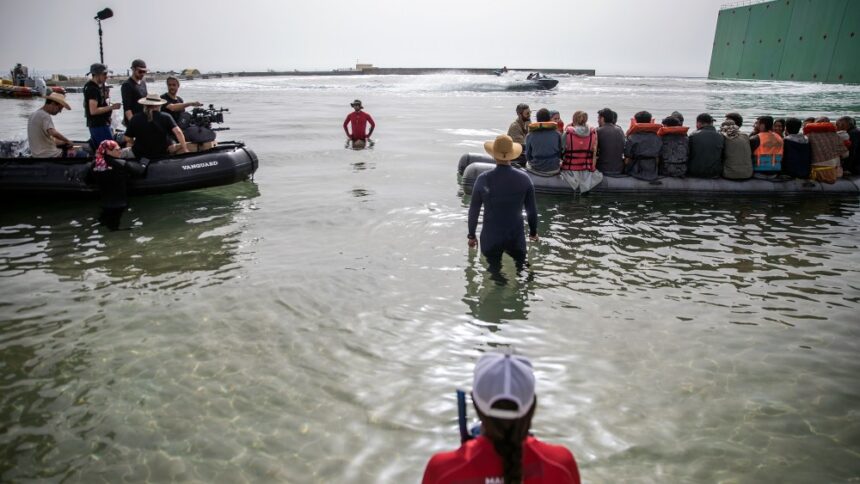
Filming of “People of the Book” at Ciudad de la Luz DAMIR SAGOLJ
The timing matters. Segal argues that casting independent theatrical films has become harder than ever as actors with international market value are tied up for long stretches on films and series for studios and streaming services.
For the first time in her career as an independent producer, that allows her to offer pay-or-play deals to actors. “That’s very, very hard for independents. I’ve never been able to before,” Segal says. The structure lets her “play or swim in the same pool” and tell an agent: “We can offer your client a pay-or-play deal on this film.”
Orogen brings the private capital required alongside SETT, but Segal also points to its senior team’s experience in film sales and distribution and its involvement in casting, distribution and commercial viability. She describes its contribution as “business scrutiny,” balancing SETT’s longer-term focus on building a sustainable company in Spain.
“You can actually build an industry rather than just make films whenever you can,” Segal says. She estimates it will take around three years for the operation to reach cruising speed.
“People of the Book” offered an early test. Segal says roughly 85% of its crew was Spanish and describes it as “the best crew I have ever worked with across the whole world.”
Her verdict on the opportunity around Alicante is succinct: “It’s an industry waiting to happen.”
Aerial view of the Ciudad de la Luz studios in Alicante Courtesy of Ciudad de la Luz
“I make my own films. I’m not a service producer and I never will be,” she says. Europe, she argues, needs to avoid becoming simply somewhere productions arrive for locations and incentives before moving on.
“People come here and use it as a location,” Segal says. “They don’t invest in the ground of it, but we want to change that by embedding paid training into every production, to help build the local industry and develop the filmmakers of the future.”