





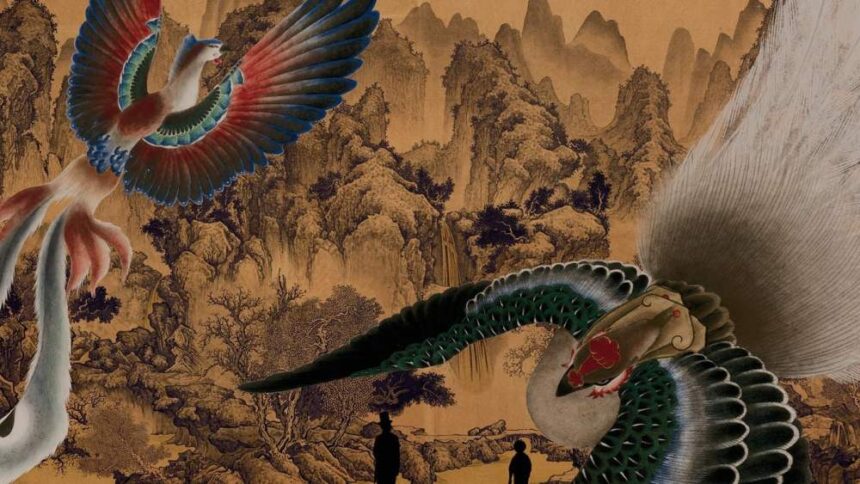
And then the style shifts again: blue water, a black whale, exploding into more kaleidoscopic paintings which fly through what appear to be homages to Pieter Bruegel. It’s a curious mix of eras, symbols, deities and animals all coalescing in one place, the invasiveness of the regime immediately apparent in how aggressively a factory juts from the more gently painted mountain landscape. Abstract electronic tones in the score create further dissonance in this surrealist fever dream of a picture as the scenery and style change to meet the needs of the moment.
“Magic Atlas” is more compelling for how it looks than for how that look pairs with its story, even as it touches on some impressively odd and grotesque concepts, like a mass surveillance system comprised of giant mosquitoes. There’s little ambiguity about this mix of folkloric imagery with science fiction: The generals’ Orwellian nature couldn’t be more apparent than in the moment they declare, “You have practiced criminally outmoded thinking” — to a child they charge with having “possession of false memories.” (Or rather, the memories the government permits people to have.) The blatant suppression of truth is, at least, an easy theme to relate to in the present moment.
It’s perhaps a difficult film to fully connect with emotionally, not necessarily because of its symbolism but more due to its fragmented nature — especially as the story becomes even more metaphysical, even poking fun at the artifice of its own created world. Xun has said before that he’s not particularly concerned if everyone understands everything in the film, a perspective which is more than fair. But the technical merits of “Magic Atlas” prevent it from feeling totally alienating; frequently, the film even approaches the divine.