



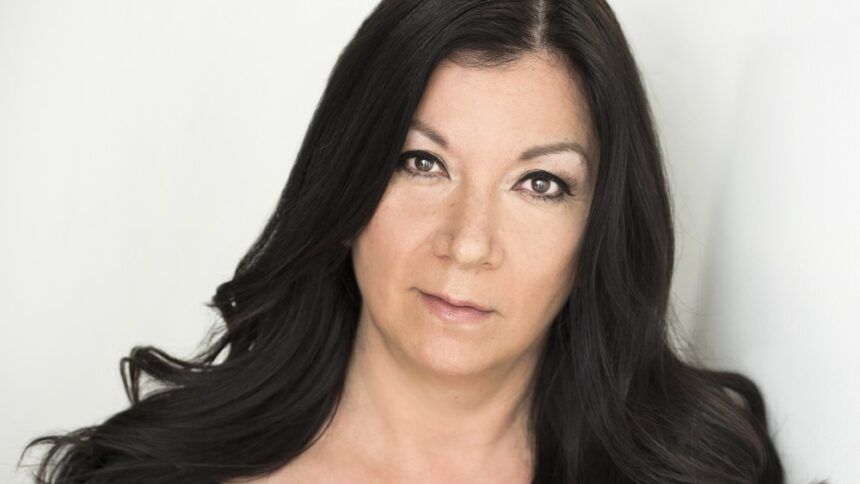
Métis/Dene filmmaker Marie Clements brings her new three-part musical documentary series “Reclaim My Skin” to the Vancouver International Film Festival on Oct. 10, exploring how colonization has stripped Indigenous women and Two-Spirit people of their power and how they are reclaiming their voices through activism, politics and the arts.
The screening will come three days after Clements won a top prize at VIFF for feature “Where We Stand.”
“I just kind of felt that the cellular level of the power of women is extraordinary,” Clements told Variety. “And you definitely feel it when you’re in rooms with them, but also just the idea that it’s not just one voice. It’s going to take hundreds of voices to create a seismic change.”
One of the most notable conversations in the series is Clements’ interview with Gloria Steinem, conducted in New York alongside Indigenous activists Louise Wakerahkats:te Herne and Michelle Schenandoah. Clements says the encounter highlighted a lesser-known connection between Indigenous women’s political structures and the history of feminism.
This shifted with colonization.
“I love that the feminist movement was influenced by Indigenous women when they first met, and these white suffragettes began to understand that, oh, these Indigenous women have way more freedoms than we do, and how can that be?”
Research for the documentary led Clements to accounts of Indigenous women crossing paths with early white feminists, particularly in the eastern U.S. where there were more points of intersection.
”These early conversations, I think, were instrumental in the feminist movement. And that Gloria Steinem recognized this, and that these other matriarchs understood that relationship and understood how that changed the trajectory of feminism, I think is really kind of cool, because not a lot of people would put those things together.”
While the series looks backward, Clements stresses that its concerns are not confined to the past. Indigenous families continue to carry the effects of not-so-distant historical trauma, but they are also experiencing many of the same issues today – like the separation of children from their families, or people being taken off the streets.
“Even though our past is the past, it’s also happening in the present,” she says. “If we don’t continue to stand up, if we don’t continue to fight for human rights on all levels, then it can slide very easily…It’s not good enough just to stand up once. You have to keep standing.”
“I think there’s something about that as an artist: We’re here to witness what’s happening in the world, while we’re here, while we’re experiencing it,” she said.
Clements believes audiences can similarly become witnesses to the perspectives artists are documenting.
“They are also witnesses to a time and to what artists are saying about this time,” she said, “And so it’s a very active and very present dialogue.”
The series arrives during what Clements describes as a “Renaissance time for Indigenous filmmakers,” with Indigenous artists increasingly working both in front of and behind the camera. “There’s so much talent now,” she says.
But Clements says continued support is essential to sustaining that momentum and for giving audiences access to stories told from perspectives they may not otherwise encounter.
“I think we’re hungry for true experiences and true perspectives, and not just being generic storytelling,” she says. “We actually want to understand different points of view.”
Ultimately, that curiosity is what Clements hopes “Reclaim My Skin” can encourage.
“It’s really about the story and it’s really about perspective,” she said. “And the possibility of understanding something different is kind of always intriguing, right? It pulls you in.”