





As a filmmaker, Markus Schleinzer owes much to his 17-year career as a casting director.
“Directing a movie and being a casting director are quite similar jobs,” he tells Variety.
Haneke was also the one who urged him to step out from behind the scenes and become a filmmaker himself, giving him three months to write a script.
“I thought, yes, this was a compliment,” Schleinzer recalls. “But three months later he called me and said, ‘Where’s the script?’ And I didn’t have a single line.”
Eventually, he sat down and wrote one. Haneke liked it and refused to let it languish in a drawer, passing it along to French producer Margaret Ménégoz, who called Schleinzer to say she wanted to make it.“So I was trapped,” he says. “I couldn’t get away from it anymore. This is how I, finally, got kicked in my ass.”
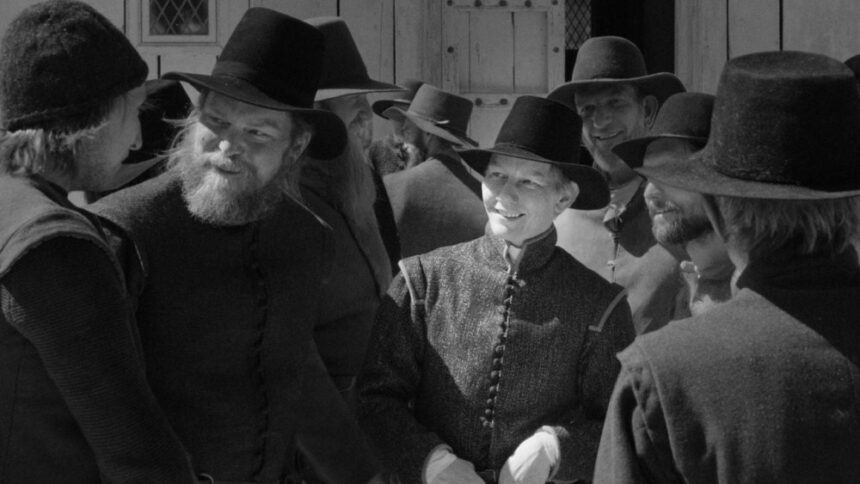
Schleinzer wrote the role specifically for Hüller, whose performance continues to move him even after countless viewings.
“She’s the queen,” he says. “I’ve seen it in post-production, whatever, I’ve seen it a hundred times. Still, there were moments, there were sentences, there were scenes, where she completely moves me, where I start to cry, where I get angry again, like an audience member who sees this for the very first time. And that’s the craft she’s owning. That’s her superpower she’s owning.”
The film began as a sprawling prose work of roughly 1,000 pages, tracing Rose’s life from early childhood. Of course, Schleinzer understood that no one was going to spend millions making a 45-hour film. “So, we just skipped the first eight hundred pages and we just concentrated on the last two hundred because the ending of the novel could stand for itself.”
If there is a through line in Schleinzer’s work, it is his fascination with people on the margins.“Where we are as a society, how we deal with our so-called outsiders, what kind of society we are is quite interesting for me,” he says. With “Rose,” he turns his attention to what he considers the largest outsider group in the world: women.
The idea grew out of a conversation with a friend who called to wish him a happy birthday and mentioned having just finished a book about a woman executed on that same date roughly 250 years earlier. Her alleged transgression? Wearing trousers.
The story sent Schleinzer researching the archives, where he unearthed numerous accounts of women who disguised themselves as men for a range of reasons. Some wanted to escape unwanted marriages and sexual harassment. Others did so to gain access to education, employment and military service. Some may have also been lesbian or transgender, he suggests.
More than historical curiosities, such stories reveal how elaborate disguises can become necessary as a means of survival in a world that denies people the freedom to be themselves — both historically and today.
A mask can function as armor, protecting its wearer. “If it’s something that helps you, I think it’s okay,” he says. “But when it becomes a cage, that’s the weird part of it.”
He describes “Rose” as a “love letter for all those people who, for various reasons, have to hide who they are, or to serve the community they really want to serve or have to put on a mask to achieve the things they wouldn’t be able to without them. They couldn’t live the fullest life, because we wouldn’t let them.”
Rose, Schleinzer explains, is not some revolutionary seeking to overthrow the society around her. She simply wants to belong, to work and to serve. The injustice is that she must conceal her identity to do what others are free to do openly.
“I was born a feminist without knowing,” Schleinzer says. He grew up surrounded by women, and when he started school at seven, he encountered a different set of rules. He remembers realizing that “there is a different system that exists in the world” and it was one he “didn’t like very much.”
“The cruelest thing in the world is our own imagination,” he says. “And the more I feed imagination with images like this, the crueler we can get, because we completely lose empathy.”
For Schleinzer, it is important to acknowledge the violence without turning it into spectacle, trusting viewers to understand its consequences without being shown every physical detail.
Ultimately, the central question that “Rose” asks isn’t whether people should be allowed to step outside society’s expectations, but rather why it’s so restrictive in the first place — and what might change if people were given the freedom to find their own place.
“The most difficult thing is to find one’s own place,” Schleinzer says, noting that what feels like belonging today may change tomorrow. “We have to accept that change is happening every day. And sometimes we just should give things time to see if this could be a good thing or not.”
The masks people wear, he suggests, need not be fixed identities or permanent disguises. They can also be a way forward. “So maybe these things we sometimes call masks are just a vehicle for us to get where we have to go.”