




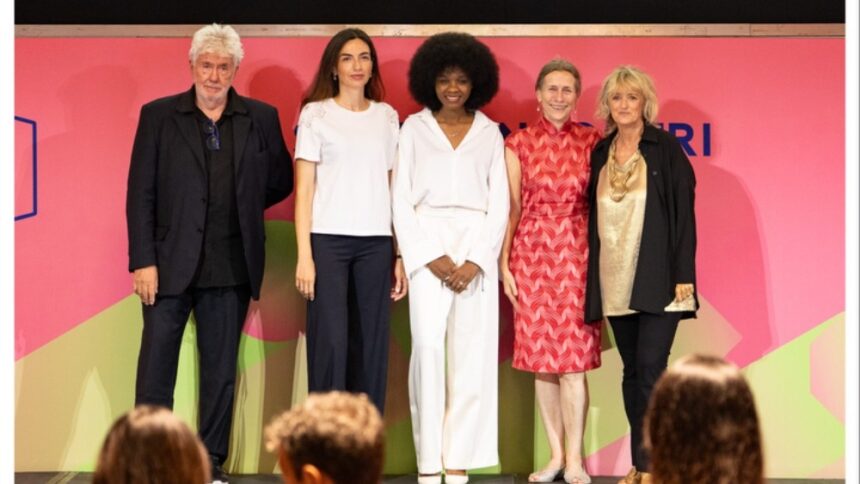
Machérie Ekwa Bahango wants Congo to be noticed by the industry.
“Through my films, I would like Congo to be seen as part of the world. Not for the labels people stick on it, but for what it really is,” she tells Variety.
“The subjects in my films are difficult, but they are issues that people face in the Congo. We’re a great nation that needs to write, and rewrite, our own history.”
Jurors Tareq Al-Ibrahim, Mariette Rissenbeek and Tamara Tatishvili said the project invites audiences to follow a “genuine and electrifying young female protagonist, trying to navigate the violence and social injustice that is her unchosen reality.”
“I’m inspired by my everyday life, and everything that’s happening around me. The topics of my films come to me naturally, as if they’re asking me to tell their story,” Ekwa Bahango says.
She has been talking about women since her short “Sema.”
“When I look back at my first feature [‘Maki’la,’ which premiered at Berlinale], which was about children living on the streets, my understanding [of their situation] was still very limited at the time. Everything became clear through the female characters I developed.”
Ekwa Bahango is a self-taught filmmaker.
“The kind of cinema I want to make requires freedom and vulnerability. I think a film school would have certainly taken that away from me.”
“Particularly in the West, the challenge is to gain acceptance for this cinema, which doesn’t yet have a defined identity – and to accept it for what it is in its current form. There’s a tendency to expect one general model of African cinema, but Africa comprises more than 54 countries. Each of them has its own cinema. Little by little, we will get there.”
“I live in a very intense society. We say: ‘Every day, we wake up to a new challenge’. My films aim to capture this unpredictability,” she says.
“The most beautiful thing we have in all of this, I think, is love. It’s what allows us to believe, be resilient and keep going. We need love in the Congo – and in the world. It’s the only thing that will soothe our sorrows.”