



“The Girl With the Leica”
Courtesy of Vivo Film, Komplizen Film, ZDF/Arte, Eolo Film Productions
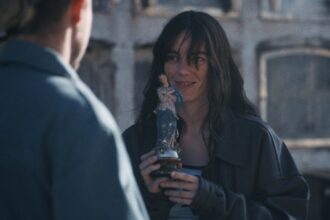
The film, on the other hand, centers on July 14, 1937, which is Bastille Day in France, a day celebrating freedom. Taro is seen meeting in Paris with her friends, including her lover and fellow photojournalist Endrè Friedmann, as she prepares to return to Spain to report on the Civil War.
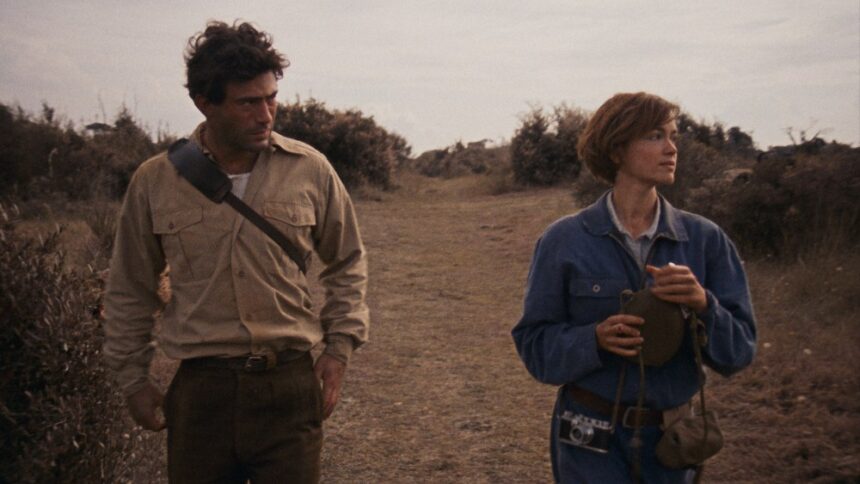
“The Girl With the Leica”
Photo by Manuel Alberto Claro, courtesy of Vivo Film, Komplizen Film, ZDF/ARTE, Eolo Film Productions
Seymour, born Dawid Szymin, went on to set up the pioneering photo agency Magnum in 1947, along with Capa and Henri Cartier-Bresson, among others. Like Taro, both Seymour and Capa died while on assignment, a reminder of the dangers of photojournalism. Three boxes of photo negatives, taken by Taro, Capa and Seymour during the Spanish Civil War, went missing in 1940, and were only rediscovered in 2007 – after which it was possible to take stock of Taro’s role in the development of photojournalism.
The film also gives an insight into her motivation for travelling to Spain during the Civil War, “hoping for a better society,” as Marazzi puts it.
The film details the deprivation of everyday life for Taro and Ruth Cerf, another friend from Leipzig, when they first arrive in Paris. But despite the hardship, the mise en scène presented is far from bleak. It is a view of “young, simple, penniless people who like to have fun and enjoy life,” Marazzi says.
As well as her political commitment, the film focuses on the “light-hearted” side of Taro. It shows Taro and her friends living life day by day, engaging in romantic affairs and strong friendships.
“She was a young, lively, pretty, seductive woman, so she’s not giving up her personal life in order to become a strong, politically committed photographer,” Marazzi says. “It’s the combination of these two aspects that I thought was important to tell.”
Marazzi didn’t want to create a “proper period piece,” so the actors speak in a contemporary way. “As a woman, Gerda comes across as a very contemporary figure in the way she is trying to define her identity. She is finding out about herself as she goes along.”
The film’s contemporary relevance is clear, in the filmmaker’s view. “There are many similarities between the 1930s and now, with the rise of right-wing nationalism reminding us of this time,” Marazzi says. Added to that, “the involvement of journalists in conflicts like Ukraine and Gaza can be traced back to the Spanish Civil War,” she says. Now, as then, journalists are highlighting that “democratic values are at stake,” she says. Marazzi also points out that “many media people have died” in both conflicts. “If Gerda was alive now, she would probably be travelling to one of those two places,” she says.