





I’m an ardent fan of Ken Russell, yet I always considered “The Devils” to be a transgressive novelty: a voluptuous exercise in extreme blasphemy and extreme horror. No doubt: It’s both those things. Yet I didn’t think it was anything more than that. (For me, that was enough.)
The relevance begins with the fact that it’s a fantastic film (much more so than I thought), something that wound up being obscured by all the nasty controversies that engulfed it. The movie is set in 17th-century France and centers on a Roman Catholic priest, played with searing brilliance by Oliver Reed, who is living the life of a libertine. He sleeps with young women and justifies it because in his mind it comes down to: If it feels good, God must have decreed it. “The Devils” plays like the ultimate lapsed-Catholic fairy tale, and that’s part of what got it in hot water at the time. Over the years, the film has been censored, butchered, and banned. But all of that is now just catnip to an era like ours, which might be called the Age of Armchair Insurrection.
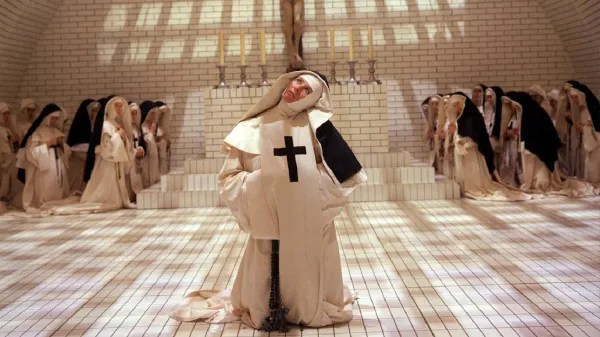
To clamp down on Grandier, the king’s representatives hatch a plot to destroy him through evidence of his depravity. This keys off the fact that the nuns of the Ursuline convent, led by the hunchbacked abbess Sister Jeanne des Anges (Vanessa Redgrave), are obsessed with Grandier, the rock-star priest they all secretly desire. A plot is launched to suggest that the entire convent has been bewitched by Grandier. Are the nuns possessed by devils? No. But it’s part of the film’s sensationalist design that they wish they were (in spirit, they want to join the orgy of the counterculture), and the plot against Grandier gives them the excuse.