



Last week, politicians decided they could not let Hollywood slip away.
First, California Gov. Gavin Newsom pushed for a resolution of the Paramount antitrust case out of fear that the studio would leave the state. And in Congress, Republicans and Democrats joined to introduce a U.S. film incentive, recognizing they are at risk of losing a critical industry to foreign competition.
In short, it was the week that Hollywood became too big to fail.
In both cases, the result is a deepening integration with the state. The Paramount antitrust settlement entails five years of government monitoring and commitments to keep ownership of studio lots, to produce a certain number of films and to install an oversight board as a watchdog for news networks CBS and CNN.
Neither side in the merger battle wanted this outcome. Paramount CEO David Ellison wanted to buy Warner Bros. Discovery without conditions but was willing to accept some state intrusion as the price of scale. California Attorney General Rob Bonta, meanwhile, wanted to block the deal outright or at minimum force divestitures.
Bonta’s critics called the deal a “cave.” Compared with blocking the merger, it is. But it also commits the attorney general’s office to enforcing Paramount’s production levels in an unprecedented way.
“If we think that there is a problem, then we are going to initiate the court process,” Blizzard told Judge Araceli Martínez-Olguín at a hearing on Sept. 24. “This is an area where it may come back to you.”
Hollywood has historically been wary of government involvement, whether in the form of censorship or via anti-monopolization efforts. But unions and studio chiefs celebrated last week’s developments.
“In almost every instance, Hollywood by and large resisted and was scared of interference,” Galloway says. “The contrast is that these two moves are by and large welcomed by Hollywood.”
Across party lines, the fear of losing Hollywood has proved a powerful motivator. Paramount’s threat to leave California spurred action from Newsom and L.A. Mayor Karen Bass. And the end of Peak TV and the decline in production jobs have galvanized support for incentives.
Sen. Tim Scott is a Republican from South Carolina — not exactly a film hub — but even he is a fan. “We cannot stand by as more and more American film production moves overseas,” he said last week, “taking jobs, investment and an important source of American cultural influence with it.”
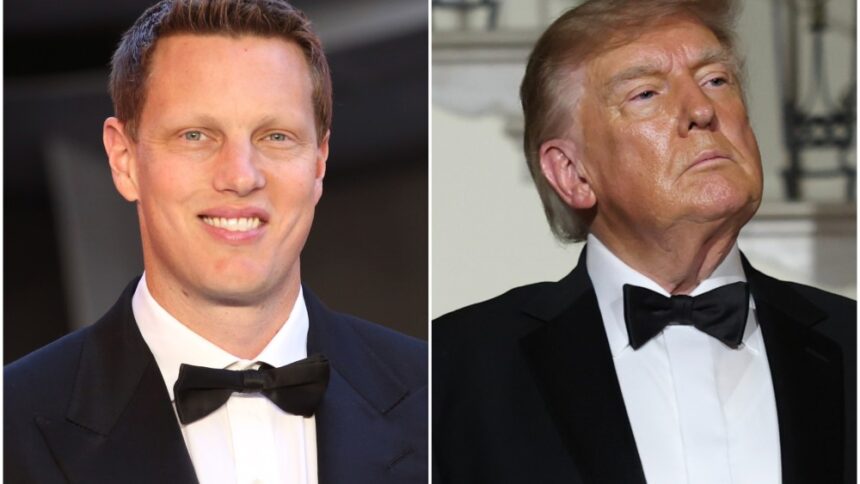
Pictured: Paramount CEO David Ellison attended President Trump’s state dinner on Sept. 24, capping a historic week