





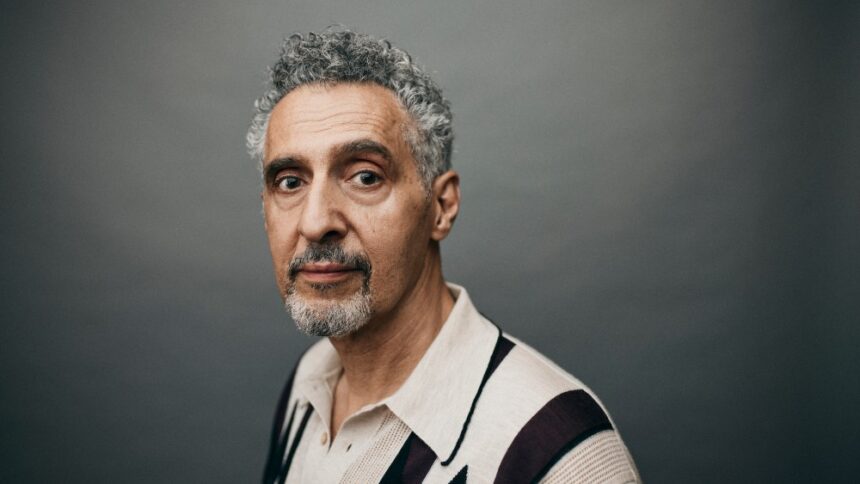
John Turturro never actually picked a pocket on the subway, but he came close.
That is about as far as the star of “The Only Living Pickpocket in New York” was willing to take his homework, which he did under Apollo Robbins, the sleight-of-hand artist Turturro describes as part concert pianist, part psychologist. The rest of the practice happened on set, where he spent the shoot lifting things off the crew and occasionally getting caught. “The whole idea is that you don’t feel it,” he says. “It’s kind of a magic trick.”
The film, written and directed by Rian Johnson regular Noah Segan, runs a tight 90 minutes and puts Turturro at the center as Harry, an aging thief caring for his disabled wife in a city that no longer has much use for him. Steve Buscemi, his co-star across “Miller’s Crossing,” “Barton Fink” and “The Big Lebowski,” and Giancarlo Esposito are along for the ride.
Turturro, who has been a caretaker and a guardian himself, says the restraint is the point. “When someone goes for your jugular, sometimes you can recoil,” he says. “But when someone opens their heart up and offers it to you, it allows you space to enter.”
“As you get older, time is precious,” he says. “I believe in the audience, and I believe in the young audience, too.”
Listen below!
The conversation has been edited and condensed for clarity.
John Turturro in “The Only Living PIckpocket in New York”
Courtesy of MRC II Distribution Company
Have you ever actually pickpocketed anyone?
I practiced a lot on set, constantly trying to do it with the crew. Sometimes you’d get caught. The whole idea is that you don’t feel it. It’s kind of a magic trick.
Noah Segan was an actor before becoming a director. What’s different about working with someone who understands what it’s like to be in front of the camera?
It helps, but I’ve worked with a lot of actor-directors, and they’re all different. He’s not cynical. He’s an open-hearted fellow. He wrote the script, and what I brought to it was my offering. He was very open to things. He gave me a playlist of songs he listened to, and I used a lot of them on the set.
He was really delicate. The cinematographer, Sam Levy, who was Harris Savides’ assistant, brought in these old lenses from the ’70s. We did tests with them, and that’s why the movie has that kind of ’70s vibe. We wanted to find the most intimate way to shoot it without an extreme amount of cutting.
You and Steve Buscemi have worked together for more than 30 years. How much of that chemistry comes from friendship versus acting?
Harry is caring for his disabled wife in a city that doesn’t really need him anymore. The film is deeply emotional but never sentimental. How did you find that balance?
I know from being a caretaker myself, a guardian, sometimes in extreme situations, that it’s not a celebrated thing. You can be upset, but you’re giving to someone else. You’re putting your attention on the other person, and you’re doing it for them. It’s not about you.
The film creeps up on you emotionally. I’ve seen it a few times and seen the effect it has on people. Rian Johnson told me it gets him every time. There’s a restraint that allows you to feel something. When someone goes for your jugular, sometimes you can recoil. But when someone opens their heart up and offers it to you, it allows you space to enter.
I’m from the Bronx. I grew up watching John Starks and Patrick Ewing walk off without a ring. And you’re on an Oscar run the year the Knicks finally win the championship. Do you feel like you can do anything now?
It felt like one of the few real team victories.
This was a team, a real team victory, and that’s beautiful in life because people don’t celebrate the collective. It really takes the collective to accomplish things. It’s the same way when you do a movie. Everything has to work together, because one thing can really mess it up. It’s been a lovely year. What can I say?
You’ve won best actor at Cannes for “Barton Fink,” earned Emmy nominations for “The Night Of” and “Severance” and never received an Oscar nomination. Does that register with you?
This has been a very rich time for me, a wonderful career. I didn’t know I was going to work with all different kinds of people who would give me different opportunities. I’ve worked with so many great directors, so I’m very appreciative of the career I have.
I’m a huge fan of “Romance & Cigarettes.” Do you ever think about getting back behind the camera?
I fought to get it back and put together some money, including some of my own, to distribute it. We got a tremendous response from critics, and in some countries it played for a really long time. That’s something I’m quite proud of. There are exceptional things in that movie.
“Severance” introduced you to a generation that might not know your earlier work. What do you think has made the series resonate?
We never know. I think the success was the execution by Ben Stiller, and Dan Erickson posed the question about having your brain split. Something about that resonated post-COVID, even though we shot it during COVID.
You don’t know what’s going to resonate with people. It’s a wonderful group of people, and I’ve gotten to work with Christopher Walken, which was sort of my idea. Shows like this pose a question, and I’m interested in how you answer it. How do you survive this inside and outside?
You have a screenplay of Philip Roth’s “Sabbath’s Theater” and have been trying to adapt Susan Sheehan’s Pulitzer Prize-winning book “Is There No Place on Earth for Me?” What keeps those projects alive for you?
I have the rights and the screenplay for “Sabbath’s Theater,” which is pretty wild, racy, about sex and death. I just have to find people who will be brave enough to do it. We tested it with an audience as a play, and it played really well.
I’ve also wanted to do “Is There No Place on Earth for Me?” for many years. It’s about mental illness, and I have a lot of experience with that, unfortunately. But it’s not what you would think, because it has the whole person in it. It’s not just the disease. It’s the family and the labyrinth of the mental health system, which I know really well personally.
I was going to do it as a miniseries, but it’s a difficult subject because people always want a story where someone gets better. The idea is that someone can find a level of peace, and that the family can stay together. A lot of families are splintered by it and very isolated.
These are real people who suffer. They have tremendous dimension and capacity for manipulation, lust, ambition and rage. They’re full human beings. That’s something I would love to get a crack at.
You’re 69, and you look 40. Has the way you decide which projects are worth your time changed?
I always was sort of picky, maybe stupidly at times. I tried to save my money when I first started, because I’d done interesting plays, and I would turn things down. In those days, you could make a nice living in a middle-sized film, and I never did big films until 2000 or so.
As you get older, time is precious, and the things I really want to do, I don’t want to give that up. I have confidence in the audience. Sometimes the gatekeepers can help you, or they’re an obstacle, but I think audiences are hungry to see different kinds of things. I really do. I believe in the audience, and I believe in the young audience, too.