




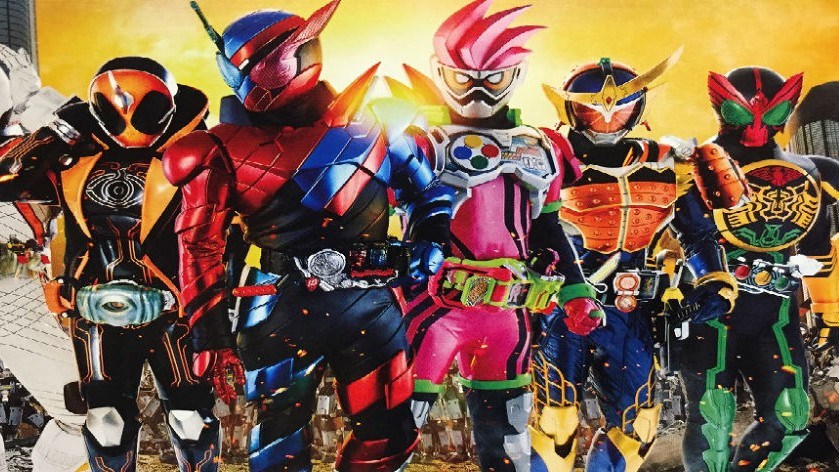
Toei, the Japanese studio giant behind “Kamen Rider” and the Super Sentai series that became “Power Rangers,” has drawn up rules for generative AI and started using AI in its film and video production, president and CEO Yoshimura Fumio said at the Taiwan Creative Content Fest (TCCF) in Taipei.
A dedicated team at the company is testing how far AI can be used in actual content production, and Toei is building an AI system that helps less experienced producers estimate budgets.
“I believe AI is not something that takes away jobs, but a tool that expands the possibilities of expression and business,” he said.
“We aim to bring game creators’ talent on board over the long term as a new vein of IP creation, and make games the starting point for stories in place of novels and comics,” Yoshimura said.
The keynote also mapped out how Toei is taking “Kamen Rider,” which turned 55 this year, beyond Japanese TV. Yoshimura held up the franchise as his main example of what the company calls the “evergreening” of IP. The first series premiered in 1971, and the Showa-era shows that ran until 1988 built its core fanbase. The Heisei-era series that began in 2000 handed the franchise down from parents to children, while events, merchandise, manga, anime and stage shows have since carried it to a third generation.
In April, Toei launched The Kamen Rider Animated, an animation label. Its first project teams the studio with Aniplex, the company behind “Demon Slayer,” and Shirogumi, which worked on Yamazaki Takashi’s “Godzilla Minus One,” on a new “Kamen Rider” property with a scale and style of action only animation can deliver. A live-action label, The Kamen Rider Premium, will make full-scale hero action films for a wider audience, including international viewers and people who don’t follow the TV shows.
“Now that content rooted in local cultures and histories, like ‘Shogun,’ is crossing racial and national borders and captivating people around the world, I’d say the main battlefield for our business is overseas,” he said.
During the audience Q&A, Yoshimura said that before “Power Rangers,” Toei exported its Japanese series unchanged, and they struggled to win over Western audiences. The breakthrough came from keeping only the characters and rebuilding the cast and drama in the U.S.
“Power Rangers” has now run in the U.S. for more than 30 years. In 2025, the original “Mighty Morphin Power Rangers” was relaunched as “Mighty Morphin Power Rangers: Re-Ignition,” with newly designed toys from Hasbro, a “Fortnite” collaboration and a Lego line in the works. Toei used a similar remake model in the Philippines. “Voltes V: Legacy,” the 2023 live-action version of Toei’s 1977 anime “Super Electromagnetic Machine Voltes V,” peaked at a 58% rating there and was released in Japanese cinemas the following year.
Toei is the only company in Japan that owns and runs two studio lots, one in Tokyo and one in Kyoto. The Tokyo lot houses Japan’s only permanent 270-degree LED volume stage.
Toei is also making short-form content. “Everyday Host Club” is a short anime of 24 episodes that run about three minutes each. “Meshimori Onna,” produced at the Kyoto studio for a client, is a vertical period drama of 30 episodes that run one to two minutes. Yoshimura suggested that vertical formats could one day become the norm even in cinemas.
“We are looking for partners with whom we can plan, make and deliver compelling stories to the world together,” he said.
Yoshimura joined Toei in 1988. He worked in live events, licensing and digital distribution, including some of Japan’s early mobile content and subscription streaming services, and became president in 2023.