





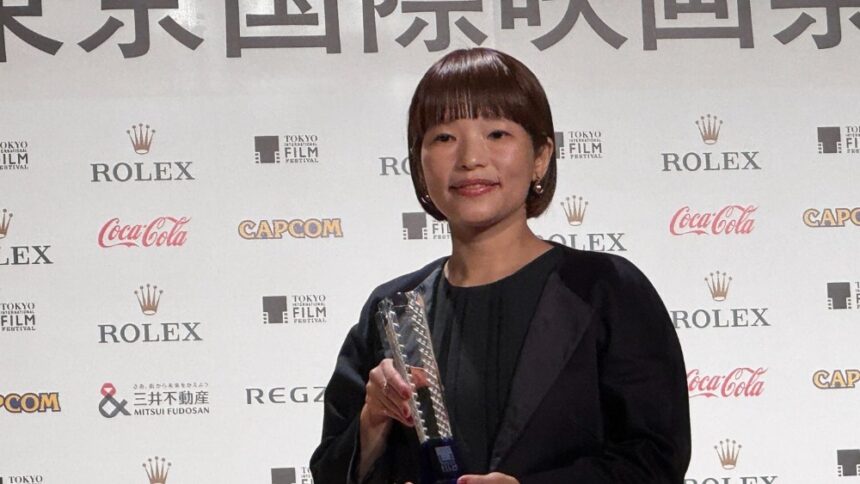
In 2005 her first feature-length screenplay, “The Sakai’s Happiness,” won the Sundance/NHK International Filmmakers Award. Based on this script, she directed her debut feature of the same title.
After releasing the 2015 drama “Being Good,” O stepped back from features to raise her two sons, though she directed a segment of the 2022 international anthology “Tell It Like a Woman.” She returned to features in 2024 with the coming-of-age drama “Living in Two Worlds” and followed with the 2025 eco-themed children’s drama “How Dare You?”
The Japanese film industry, she says, is “overwhelmingly different” since she first entered the industry as a crew member in 1999: “There are a lot more female staff members now, and directors too. That’s definitely the biggest difference.”
Also, what she describes as “the system for making movies” has changed. “Back in the day, the industry was like a pyramid, with directors at the top. That was my mindset, too, back when I was working as part of the crew.”
Now, she explains, “It’s become pretty common for everyone to go through what you might call ‘respect training.’ In terms of rights, everyone is more or less on the same footing – or rather, in the same position.”
But while production of Japanese films has been rising – nearly 700 are now released annually – O says she “can’t help but feel that the overseas market hasn’t really taken off yet.”
In Hollywood, she notes, directors are “usually paid a proper fee right from the planning stage, though I suppose it depends on the scale of the project. It’s part of the contract, but in Japan, the reality is that you don’t get a single yen at the planning stage. And that’s been the reality for a long time. I’m going through that kind of experience right now, too.”
She takes inspiration from her mentor Obayashi, who started as a director of experimental films in the 1960s and went on to helm the cult sci-fi hit “House” and enjoy a long career mostly outside the Japanese industry mainstream. “He was always boldly taking on challenges,” she says. “It’s all about taking on challenges, right? It’s a constant battle but those challenges are like nourishment.”
“‘House’ came out the year I was born – 1977,” she says. “That makes it a movie from nearly 50 years ago, but when young people watch it today, they’re absolutely blown away. I think it’s a film that will never lose its appeal.”
That sort of longevity appeals to her – and not only for films: She notes that Obayashi died at age 82, Kurosawa at 88 and Shindo Kaneto – the scriptwriter and director whose eponymous prize she won – at 100.