





The gathering kicks off today at the Halle de la Villette where a new study is being unveiled, revealing that the global creator economy is on track to reach $217.3 billion in 2026, marking a 26.2% year-on-year increase. The market, which has nearly tripled in size over the last five years, is projected to reach a staggering $1.22 trillion by 2033.
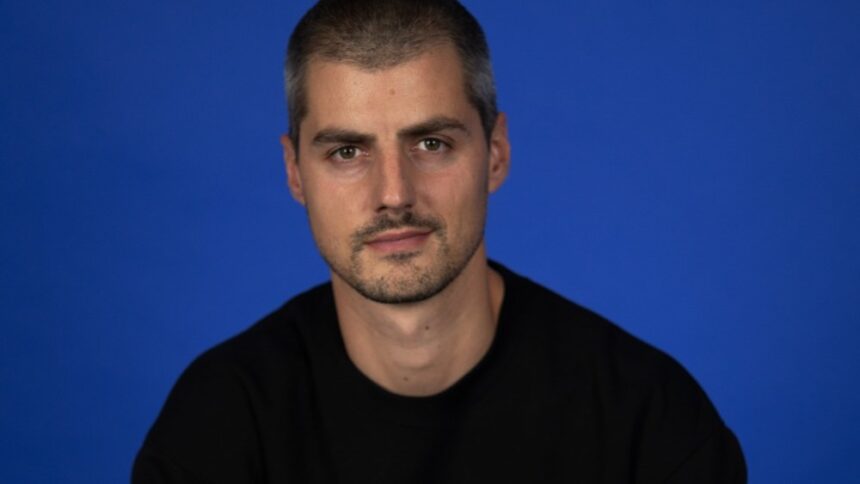
Marc Lesage-Moretti, a former Goldman Sachs vice president turned content creator, known online as Jokariz, who co-founded Paris Creator Week in 2024, says the findings underscore a dramatic shift in an industry which took time to be taken seriously.
“In the United States, everyone was talking about the creator economy, but when I started using that term in France three years ago, people looked at me as though I was speaking Chinese to them,” Lesage-Moretti tells Variety in a zoom interview a few days before the start of the event. “They would say, ‘Oh, the creator economy? You mean 14-year-old kids making entertainment videos in their bedrooms on YouTube?’”
The huge expansion of the Paris Creator Week this year underscores how the general perception has evolved. It’s grown from 4,000 participants last year to an expected 8,000 this year, while its exhibition space has increased fivefold, from 200 to 1,000 square meters. YouTube alone is taking a 100-square-meter stand, Lesage-Moretti points out.
“The idea is to create the VivaTech of the creator economy,” says Lesage-Moretti, referring to the major Paris technology conference.
Unlike consumer-facing creator conventions, Paris Creator Week is positioning itself as a B2B gathering where creators, media execs, platforms, brands, agencies and investors can explore partnerships and new business models.
Advertisers are expected to contribute $172.8 billion to the sector in 2026, representing 79.5% of total spending, while creators themselves receive an estimated $92.6 billion, or 42.6% of the overall market.
The industry’s rapid expansion is also fueling a wave of M&A’s. According to the Paris Creator Week study, 70 acquisitions took place globally in the first half of 2026, up 23% from the same period last year. North America accounted for 64.3% of acquisition targets, compared with 27.1% for Europe.
Paris Creator Week is dedicating an entire conference track to M&A, looking at how investors value creator-led businesses and manage the “key man risk,” when companies are built around a single personality.
Lesage says some businesses closely tied to their founders have managed to attract investment. For instance, the French podcast company Legend which lured a Belgian fund at a valuation of €72 million.
“These are businesses that people thought couldn’t be sold because they were too dependent on a single personality, but we’re seeing that’s not necessarily the case,” he says.
“I still think creators on social platforms, including YouTube, are renting audiences. They don’t own the audience,” Baldwin tells Variety. “And the creators who can figure out how to take their audience and own that relationship are the ones who are going to be able to build new businesses around that community.”
“France has always been, culturally, a champion of independent voices,” he says. “French cinema has an outsized footprint considering the size of the country. You have the Cannes Film Festival. You have an extraordinary amount of production coming out of France.”
“Now, the question is: Will they champion the entrepreneurial spirit? And I think the answer, when I look at Paris Creator Week, is yes.”
“Like with any maturation in the economy, there will be consolidation. There will be winners, and there will be those that close shop,” he says.
The major challenge is to overcome the key man risk, says Baldwin, who points to MrBeast, Dhar Mann and the British creator collective the Sidemen as examples of creators building businesses capable of expanding beyond their original social media audiences.
“Creators are increasingly interested in working with distributors and platforms beyond the ones where they originally built their audiences,” says Lesage-Moretti. “If you’re a YouTuber, it makes sense to be present across social media platforms to diversify, but it also makes sense to explore cinema.”
Lesage-Moretti cites the landmark experiment of French YouTuber Inoxtag, whose documentary “Kaizen” was released by MK2 French theaters and sold around 300,000 tickets in a single day. It launched on the same day on YouTube where it generated 40 million or 50 million views overall.
The Paris edition will include an intimate dinner at L’Envol, Michelin-starred chef Thibaut Spiwack’s rooftop restaurant at the Philharmonie de Paris, near the event’s venue.
Guests include Twitch CEO Dan Clancy; Justine Ryst, managing director of YouTube France and Southern Europe; Gregg Bywalski, managing director of Webedia Creators; Vincent Grynbaum, managing director of Mediawan Thematics; Nielsen CFO Jessica Holscott; and Mathieu Gallet, managing director of Bourdin Media and chairman of the supervisory board of Les Echos.
For Baldwin, the growing appetite for an industry-focused gathering like Paris Creators Week illustrates that the industry is becoming a fully fledged part of the entertainment biz.
“Why are thousands of people coming to this? It’s not a fan event. This is the business of the creator economy,” he says.
Lesage-Moretti, who is still financing the event with co-founder and managing director Pierre Alary, says they’ve received outside interest but want to keep control.