



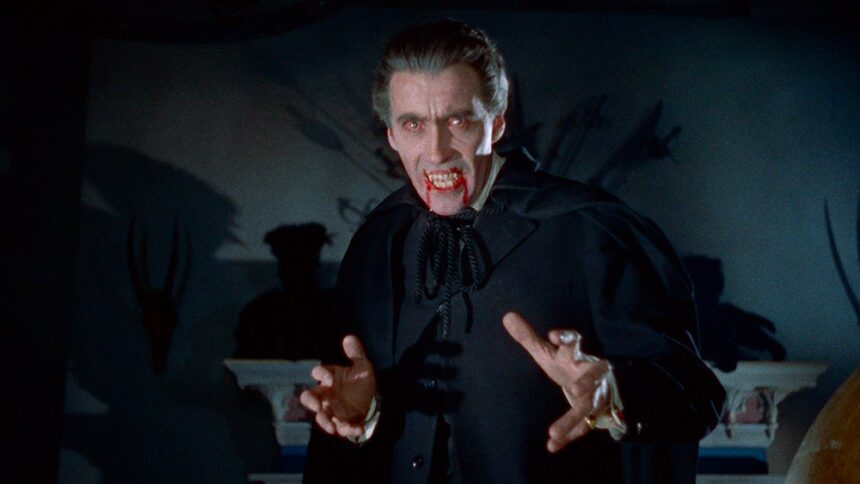
For Gore, the future for Hammer — which he acquired in late 2023 — is to see the brand resurrected, much like the famed blood-sucking Count himself, and become part of the horror conversation just as the genre continues to enjoy its most successful period in cinematic history.
It’s a commitment that has seen Gore build up an assortment of supporting companies around Hammer, forming John Gore Studios in the process. The fast-growing outfit is now producing upcoming titles such as period romp “The Return of Stanley Atwell,” starring Nicholas Galitzine and Ella Purnell and from “Hamnet” banner Hera Pictures, and the Wallis Simpson biopic “The Duchess,” starring Joan Collins and Isabella Rossellini.
John Gore
Courtesy John Gore Studios
There are more Hammer restorations being plotted, Gore and his team — including COO Anouska Spiers — sitting down with rights holders in the U.S. to figure out how to work together. But there are also significant production plans, involving both new and existing IP.
But the “real question,” he says, is “what do we do with the classics?”
Essentially, how do you take what Hammer so famously did with Dracula and Frankenstein and make something new, exciting and in keeping with the company’s legacy. “It’s very hard to contemplate how we would just do a straight remake of something that is a classic,” he says, citing Gus Van Sant’s failed shot-for-shot remake of “Psycho” as an example.
But Gore does have some thoughts. Across his films, Cushing famously portrayed Frankenstein as corrupt, ruthless or full-on villainous (such as 1964’s “The Evil of Frankenstein”). “The Cushing Frankenstein has never been redone — where Frankenstein is evil,” he says. “In most films, Frankenstein is a tortured scientist but the evil Frankenstein is something I’d like to look at.”
Hammer Films. Poster Illustration by Robert Sammelin
There’s much to be planned, but the hope is that the combined search for new big screen horror (much like Gore says he “always hunting for the next big musical or major play”) coupled with a considered exploration of how to respectfully exploit its vast library of monsters — alongside partners in the U.S. — will rejuvenate the Hammer name.
There’s definite enthusiasm and activity — and backed up by financial support — something which for such an iconic brand has been a very long time coming.
Whether Gore is Hammer’s saviour after so long in the cinematic dungeons remains to be seen. But its new owner comes in not just a dedicated and obsessive fanboy — “I feel great responsibility in bringing this stuff back,” he says — but an entrepreneur who, thanks to his money-spinning theater business, has the crucial ability to green light projects “within horror’s budget limits.”
There are also many other Hammer fanboys out there — many of them among the most renowned genre filmmakers working today. Alongside Burton and del Toro, the likes of Stephen King, Quentin Tarantino, Sam Raimi, Edgar Wright and Peter Jackson have referenced Hammer titles or expressed the influence of its work (Jackson literally shot a Super8 version of “Captain Kronos” as a teenager and later cast Christopher Lee in “The Lord of the Rings”). Maybe one of the greats would love the opportunity to now direct a Hammer movie for themselves. Gore suggests there’s hope.
“We actually have a letter from the 90s where Martin Scorsese wrote to Hammer saying, ‘I would love to make a Hammer film,’” he says. “And they never replied.”